In today’s world, where communication plays a crucial role in all spheres of society, it is essential to have efficient and reliable solutions for data transmission. In this context, fiber optics has emerged as a revolutionary technology capable of providing superior speed, bandwidth, and security compared to traditional cables.
The Fiber Optic Revolution
Fiber optic technology is based on transmitting information through pulses of light that travel through ultra-thin glass or plastic fibers. This approach surpasses the limitations of conventional copper cables, enabling significantly faster data transmission speeds and greater bandwidth capacity. Fiber optics are immune to electromagnetic interference, ensuring a stable and reliable connection.
The POLILAN catalog features a wide selection of optical cables, including distribution, drop, backbone, and splicing cables. These cables are manufactured using high-quality materials and advanced technology to ensure superior performance. They are designed to meet the demands of modern applications such as data networks, telecommunications networks, and video transmission systems.
2. Specialized Connectors and Accessories
In addition to optical cables, POLILAN also offers a variety of connectors and accessories that complement their fiber optic solutions. High-precision fiber optic connectors ensure reliable connections with low signal loss. Accessories such as termination boxes, splice trays, and adapters provide a complete solution for installing and maintaining fiber optic networks.
Technical Resources and Guides
The catalog also includes technical resources and practical guides to assist customers in properly selecting and installing POLILAN’s fiber optic solutions. These resources provide detailed information on product technical specifications, installation guidelines, maintenance best practices, and other relevant information.
Fiber optics has revolutionized modern communications by offering unparalleled data transmission speeds, wide bandwidth, and superior reliability. With the POLILAN new catalog of network infrastructures, businesses and professionals can access complete solutions for fiber optic applications, ranging from high-quality cables to specialized connectors and accessories. Regardless of the project’s size or complexity, POLILAN provides the technical solutions for reliable and efficient fiber optic installations.
Invest in POLILAN’s fiber optic solutions and experience a new level of performance and reliability in your communication networks. Consult the new catalog of network infrastructures for more information and discover how these solutions can drive your business forward.
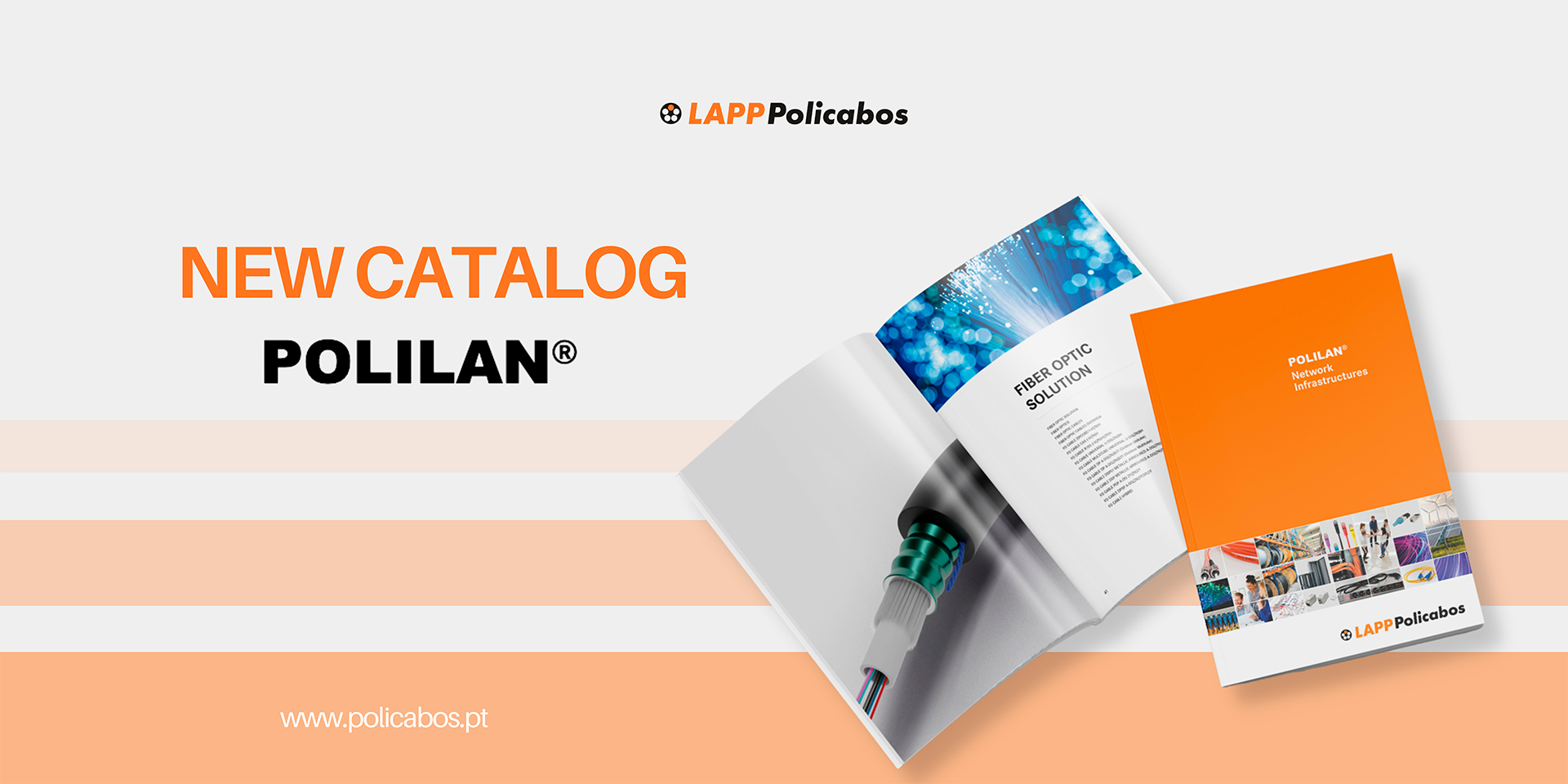
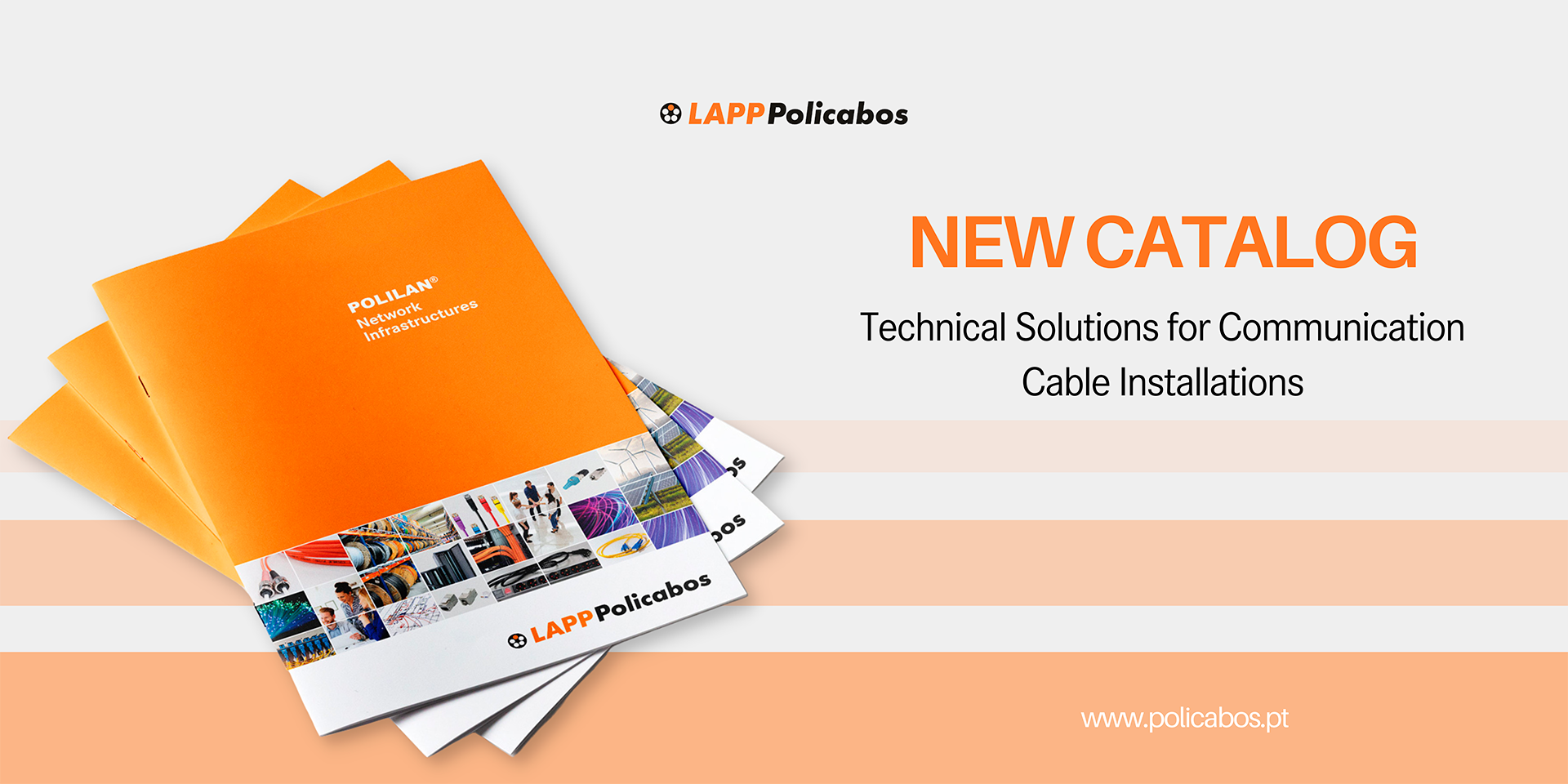
Lapp Policabos is pleased to announce the launch of our latest catalog: the POLILAN Network Communications Infrastructure Catalog. This catalog was designed to meet our customers’ copper and fiber optic communication needs. It will become a reference in the communications network infrastructure sector with various products and technical solutions.
Exploring the Solutions Offered
The POLILAN Communications Network Infrastructure Catalog features a comprehensive range of solutions that address the challenges of communications cable installations. This catalog is an indispensable source for professionals looking for reliable, high-quality products, from copper to fiber optic cables, accessories, and wall cabinets.
In this article, we will explore some of the catalog’s key offerings:
Copper
In the copper categories, we offer advanced products that ensure the performance and reliability needed for modern communication networks. With Cat6 and Cat6A cables with different types of shielding, customers can choose the solution best suited to their specific needs. Through advanced manufacturing techniques, our copper cables offer impressive data transmission speeds while minimizing interference and maximizing the efficiency of installations.
Fiber Optic
For fiber optic applications, we offer a wide selection of cables that meet the requirements for indoor and outdoor installations. With various types of shielding available, our fiber optic cables ensure high mechanical strength and protection against adverse environmental factors. In addition, we also provide hybrid lines, which combine the advantages of copper and fiber optic technologies, allowing seamless integration into complex communication systems.
Accessories and Cabinets
In addition to cables, the POLILAN Communications Network Infrastructure Catalog offers a wide range of copper and fiber optic cable accessories. These accessories facilitate communication system installation, maintenance, and management. From connectors and adapters to specialized tools, we provide everything you need to create a high-quality cable infrastructure.
The catalog also includes wall cabinets and pedestals to accommodate and protect communications equipment. With robust and functional designs, these cabinets ensure cable systems’ proper security and performance.
Technical Resources and Guides
To help our customers choose the right products and implement their cable installations, the Communications Network Infrastructure Catalog includes quick-choice guides and comprehensive technical guides. These resources provide detailed information about the product’s technical specifications, performance characteristics, and installation guidelines. These guides will be of great value to professionals who want to get the most out of their cable systems.
With the launch of the POLILAN Communications Network Infrastructure Catalog, our company reaffirms its commitment to providing quality technical solutions for communications cable installations. With various products and comprehensive technical resources, we are ready to meet our customers’ specific needs for copper and fiber optic cables.
We invite you to explore the new catalog and discover our innovative solutions. Our team of professionals is ready to help you find the best option for your communication needs. Join us in our search for reliable and efficient connections in communication cable installations.
Contact us today for more information about our products and solutions!
Download the new POLILAN Communications Network Infrastructure Catalog here.
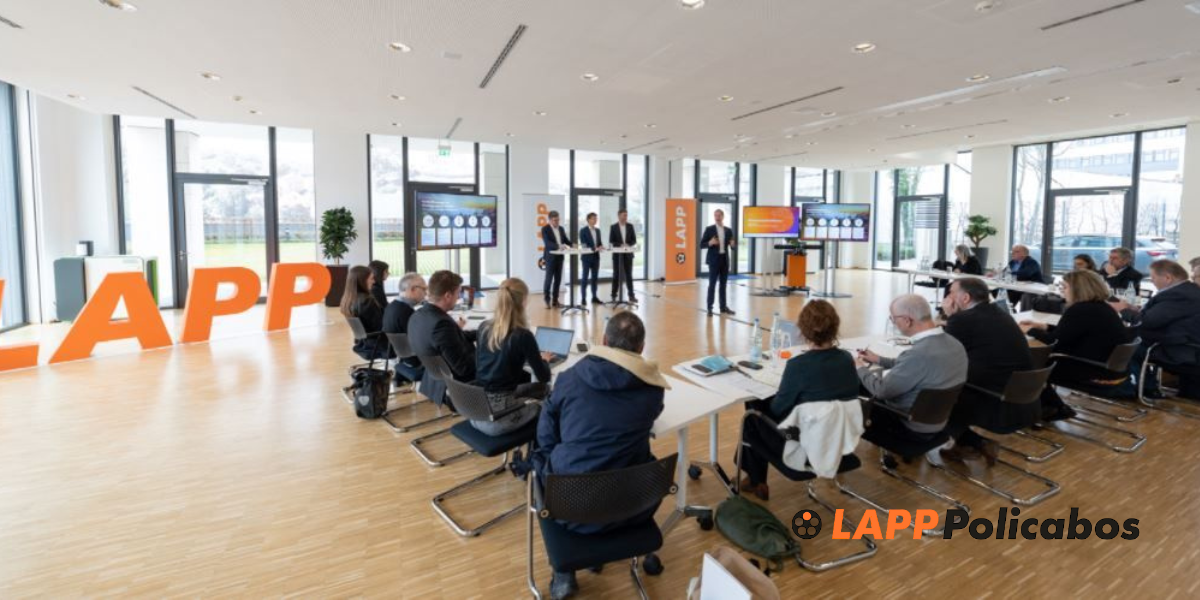
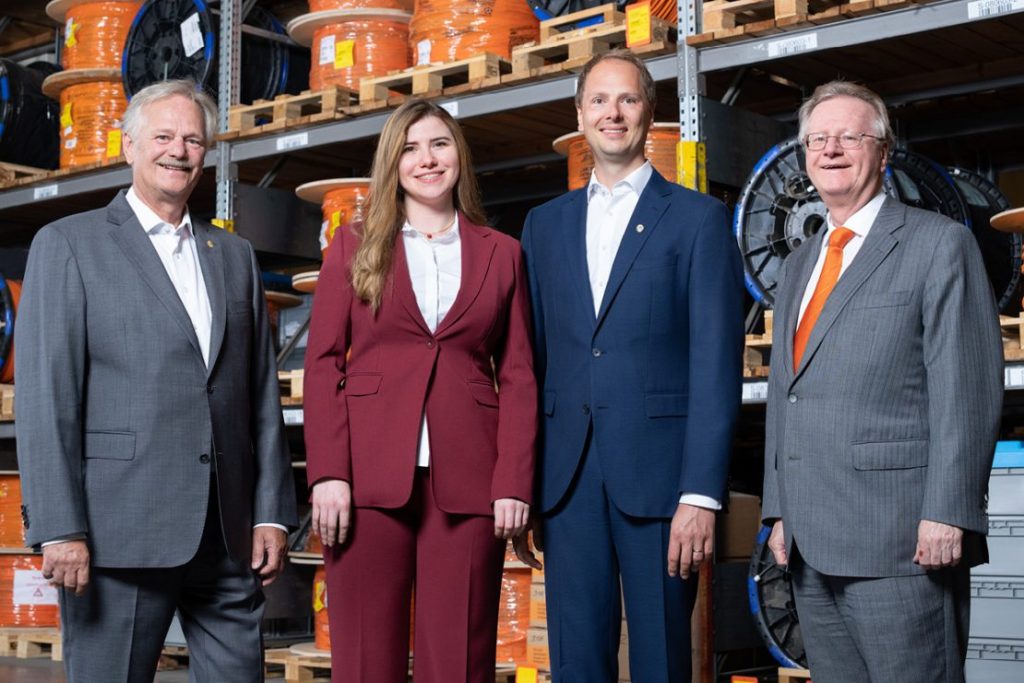
The Executive Board of Lapp Holding SE (from left to right): Jan Ciliax, Matthias Lapp, Georg Stawowy and Dr Christoph Hiller.
Stuttgart, March 2, 2023 – Despite geopolitical and economic challenges, the Lapp Group has once again successfully completed the past fiscal year 2021/2022 (October 1 to September 30). Sales of the global market leader for integrated solutions in the field of cable and connectivity technology climbed by 31.0 percent to 1,864 million euros. The number of employees increased by 10.2 percent to 5,055 worldwide as of the reporting date September 30, 2022. Earnings before taxes (EBT) increased to 132.9 million euros.
“We have turned over a new leaf at LAPP and positioned our company to be robust and fit for the future in a difficult environment. At the core of our transformation are the continuous strengthening of our innovative power, a special focus on services, and a comprehensive cultural change that makes our company even faster, more agile, and more sustainable”, emphasizes Matthias Lapp, CEO of the Lapp Group. Matthias Lapp is realistic about the current fiscal year (2022/2023). “Together with our customers and partners, last year was a real challenge. We expect this to continue – we are consistently investing in the future.”
Fundamentally sound net assets and financial position
In the past fiscal year 2021/2022, LAPP once again exceeded the sales growth achieved in fiscal year 2020/21. Sales increased by 441 million euros (+31.0 percent) to 1,864 million euros. The increase in the average copper price contributed around 6.5 percent to this sales growth, as did currency developments (+1.9 percent). Adjusted for these copper and currency effects, there was still a significant increase in sales of 22.6 percent. “This growth was mainly due to higher capacities and market share gains in our focus markets combined with increased market prices. Added to this were general catch-up effects along the supply chains”, explains CFO Jan Ciliax.
The group made strong gains in all three of LAPP’s regions. EMEA (Europe, Middle East, Africa), the most important region accounting for around two-thirds of group sales, improved by 29.4 percent to 1,352 million euros. In the Americas region (USA, Mexico, Canada, South America), sales soared to 192 million euros – an increase of 40.2 percent. And in the APAC region (Asia, Pacific, Oceania), sales climbed 32.7 percent to 320 million euros. Moreover, as LAPP’s average order intake for the year was +6.5 percent higher than sales, the order backlog at the balance sheet date of September 30, 2022, increased to €356 million, significantly higher than at the same date last year.
Earnings before taxes (EBT) increased to 132.9 million euros and return on sales by 1.5 percentage points to 7.1 percent. Significant pressure on margins due to increased material and logistics costs was offset by improved capacity utilization in the factories and only a disproportionately low increase in personnel and other expenses. At 44.0 percent, the equity ratio was up on the previous year and thus remained at a consistently high level. “LAPP’s net assets and financial position remain rock solid, allowing us to continue implementing strategic measures and investments for the benefit of our customers in the coming years”, affirms Jan Ciliax.
Overview
FY 2020/2021
FY 2021/2022
Change
Total Turnover (million Euros)
1.423
1.864
31 %
Earnings before taxes (million Euros)
82,4
132,9
61,3 %
Employees worldwide
4.586
5.055
10,2 %
Equity ratio %
42.3
44.0
1,7 %-points
Pillars for change at LAPP
LAPP has undergone major changes in recent years. Under the leadership of Matthias Lapp, previously responsible for the top selling EMEA region and CEO of Lapp Group since October 1, 2022, the course for a successful future has been set in all relevant areas of the company and new, bold developments have been initiated. “To continue growing successfully, our family-owned company needs a breath of fresh air and strong entrepreneurship. We want to be ahead technologically and culturally. To do this, we must keep putting ourselves to the test. In view of the current changes in the economy and society, this is no easy task, but it is all the more important”, said Matthias Lapp. The central pillars of change are:
1. High investment in digitization
LAPP invested in intangible assets and property, plant and equipment even more in the past fiscal year, at EUR 40.2 million (previous year: EUR 25.8 million). The focus was on software acquisitions and digitization projects as well as the further expansion of the ERP system in order to further optimize automation and processes in the areas of finance, human resources, manufacturing, supply chain, services and procurement. An important milestone in the digital transformation is the go live of the new Online Shop and customer portal, which is continuously being expanded and further developed in terms of functionalities. Last but not least, LAPP has pushed ahead with the expansion and further automation of the production plants in France, Germany, India and China.
The new tubular strander in the Stuttgart production plant.
2. Pioneering new technologies and services
LAPP positions itself as an innovative solution provider and technology leader. To this end, the family-owned company has reorganized the area of global research and development as well as the management of laboratory and test center activities. Thus, LAPP has once again succeeded in occupying economic and industrial trend topics with innovations:
With zeroCM® technology, unwanted interference currents in industrial plants can be prevented.
With the Health Check Service, LAPP is expanding its service offering for customers. The service helps to preventively minimize the risk of industrial machine failures.
The multi-award-winning MOBILITY DOCK enables an e-car to be charged at any household socket using any Type 2 charging cable.
“At the same time, we have further expanded our portfolio in our strategically important area of Industrial Communication. In this area alone, we were able to achieve significant, disproportionate sales growth compared to the Lapp Group as a whole”, adds Georg Stawowy, Chief Innovation and Technology Officer.
One important focus is the expansion of digital sales. “In a customer-centric solutions business, we have to pay particular attention to establishing the right processes and offering customers added value”, emphasizes Dr. Christoph Hiller, Chief Sales and Marketing Officer. LAPP’s core market continues to be mechanical and plant engineering. Other important sales markets are infrastructure, the food industry, logistics and, within the energy sector, especially photovoltaics and mobility. Some examples:
High-bay warehouse in the Ludwigsburg Logistics and Service Centre.
Developing together with customers
Using fast prototyping, the LAPP Singapore team develops solutions in the field of intralogistics together with a major international customer. Traditionally, elaborate samples are first constructed and tested in the development process. Today, physical samples are created using 3D printing to verify haptics, optics, handling, and assembly in production and at the customer’s site. This accelerates the innovation process.
700 kilometers of cable for mega airport
In November 2024, Korea’s Incheon Airport is expected to be the third largest international airport in the world with a handling capacity of 106 million travelers per year. LAPP’s connectivity solutions will guarantee safe and reliable operations at the 60 new passenger boarding bridges and the baggage handling system, which will cover a conveying distance of 184 kilometers when completed. In total, the LAPP Korea team has already supplied 700 kilometers of cable.
Future markets of alternative energy sources
In addition to connectivity solutions for photovoltaics and wind, demand is increasing worldwide for alternative energy storage systems & energy sources: For the Korean company LG Energy Solution, leading manufacturer of lithium-ion batteries and energy storage systems, LAPP supplied 338 kilometers of cable for 393 energy storage systems.
For the Dutch company Nedstack, leading supplier of high-performance fuel cell solutions, LAPP developed customized “plug and play” assembly solutions for different fuel cell systems. The customer was thus able to reduce its costs and standardize the cabling.
Hydrogen technology is also an exciting future topic for LAPP. For the company Maximator Hydrogen, leading manufacturer of hydrogen filling stations, LAPP supplied customized connectivity solutions that meet the high safety requirements, especially with regard to explosion protection.
4. Employee motivation through culture change
Due to the strong order situation and the ambitious goals of the Strategy 2027, LAPP has significantly increased the number of employees. As of September 30, 2022, LAPP had 5,055 employees worldwide – 10.2 percent more than the previous year. “We want to attract, develop and retain the best talent in our industry for LAPP. This is only possible with a culture of constant adaptation and lifelong learning”, says Matthias Lapp. “This is also reflected in the organizational structure with new, global and cross-functional cooperation. Only in this way can we succeed in being even more powerful and faster on the market.”
An important building block in the company’s change process is the cultural change that LAPP initiated four years ago. And it has been successful: in the mood barometer, for example, the proportion of satisfied employees has risen by 12.8 percent to 87.5 percent. And the most important indicator of employer attractiveness – the likelihood of recommendation – recorded an increase of 10 percent. “I am pleased that our efforts are being recognized and rewarded. But we still have a long way to go. We need to grow closer together globally as a group. Although we started early, we are still at the beginning of the transformation”, says Matthias Lapp.
5. The path to sustainability
On the market side, LAPP is positioning itself in the area of sustainability and offers products specifically for the solar and wind energy industry, for rail transport and for the charging infrastructure of electric cars. A central credo is: Start with yourself. All LAPP national companies worldwide are encouraged to operate their buildings or plants as energy-efficiently as possible. Wherever possible, the sites purchase green electricity or operate their own PV systems.
The concept of sustainability also plays an important role in logistics. Decentralized warehouses and delivery partnerships are used to minimize transport routes. For example, truck capacity utilization has been increased from 60% to 80% and transport distances have been reduced by a third. However, LAPP’s commitment to sustainability also focuses in particular on the product and the manufacturing process. LAPP is committed to the efficient use of raw materials and the environmentally compatible handling of chemicals and waste.
Outlook for the current fiscal year 2022/2023
Increased inflation rates, continuing uncertainties regarding material availability, and the economic and social impact of geopolitical tensions will continue to shape the current fiscal year. “Despite these challenging conditions, we are encouraged by the continuing good demand situation and a high order backlog”, says Matthias Lapp, adding, “The flexibility of our supply chain was a key success factor in the past fiscal year. We will continue to expand this.” Added to this are consistent investments in establishing a global sales, procurement, and production network. Just as consistently, LAPP also intends to continue investing in digitalization, innovation, sustainability. “And above all in our employees, who make all the difference”, emphasizes Matthias Lapp. For the current fiscal year 2022/2023, the company is currently assuming a further moderate increase in sales.
A motor cable (SERVO, VFD) contains three phase conductors and one PA, is capacitance-optimised and has braided shielding.
What is a frequency converter and what is it required for?
The introduction of frequency converters into industrial plants began in the early 1970s. Until then, it was only possible to operate electric motors directly on the grid and thus at defined speeds. If an electric motor, e.g. an asynchronous machine, is operated directly on the grid (50Hz), a fixed speed is set, known as the nominal speed, based on the grid frequency and the pole number of the motor. In the past, where different speeds were required due to the application, mechanical gears were used. Some readers may remember what was known as the “delta changeover”. This was used to limit the power of the motor at the moment it is switched on in the case of directly operated motors.
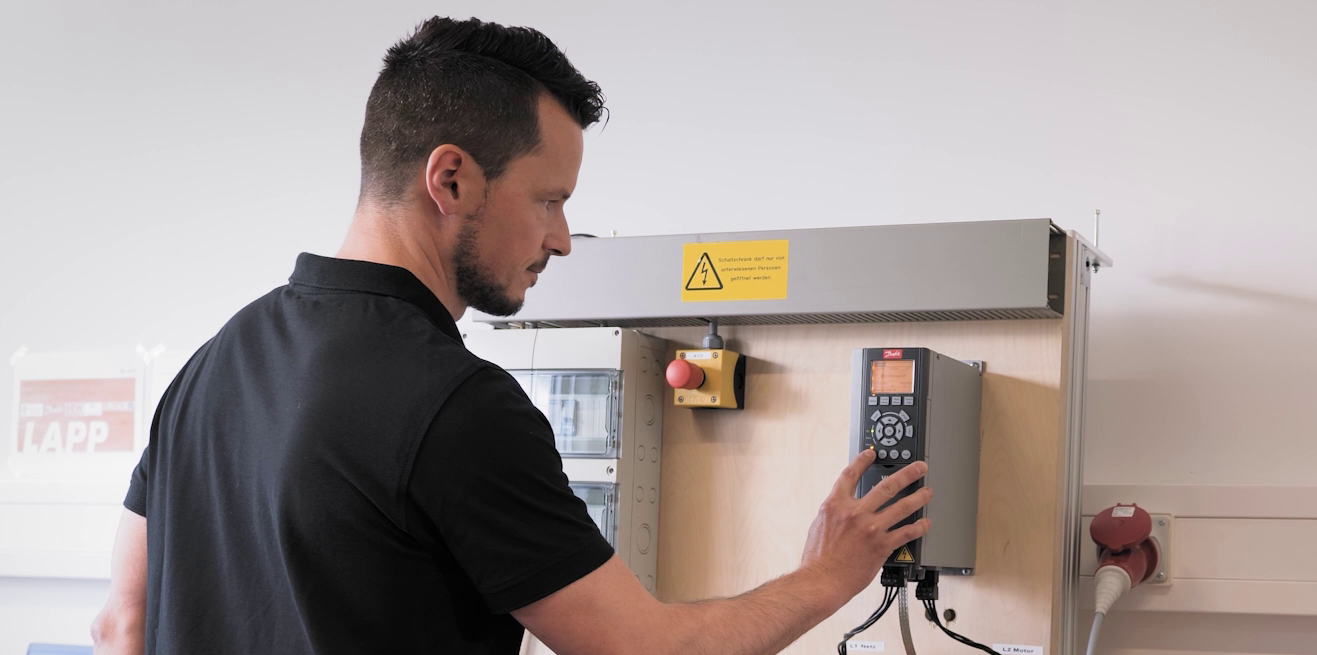
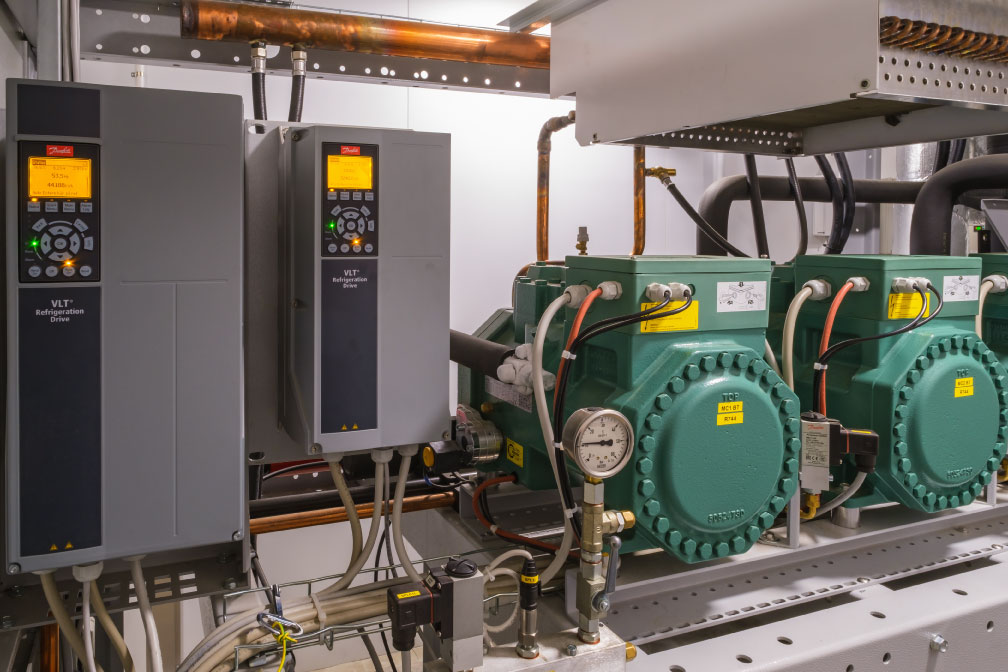
A frequency converter is required to operate an electric motor efficiently and at variable speeds.
What do variable motor speeds have in common with energy savings?
The option of continuously adjusting the motor speed offers an opportunity to save energy in many applications with different loads. For example, fans or pumps are only rarely operated at nominal power or speed. If a lower pumping capacity or conveyor volume is required, the frequency converter can easily reduce the power. Another advantage of using frequency converters (compared to motors that operate statically on the grid) is the improved process control of drives or machines thanks to the variable speed, which can often increase precision, quality and throughput.
Anyone who thinks that frequency converters can only be found in an industrial environment is mistaken. They have also long been used in the private sector. For example, frequency-converter-controlled motors with controlled speed can be found in kitchen machines, clothes dryers or heating or circulating pumps. Frequency converters are also found in electric vehicles in a modified form; however, they are operated with battery power, i.e. direct voltage.
How does a frequency converter work?
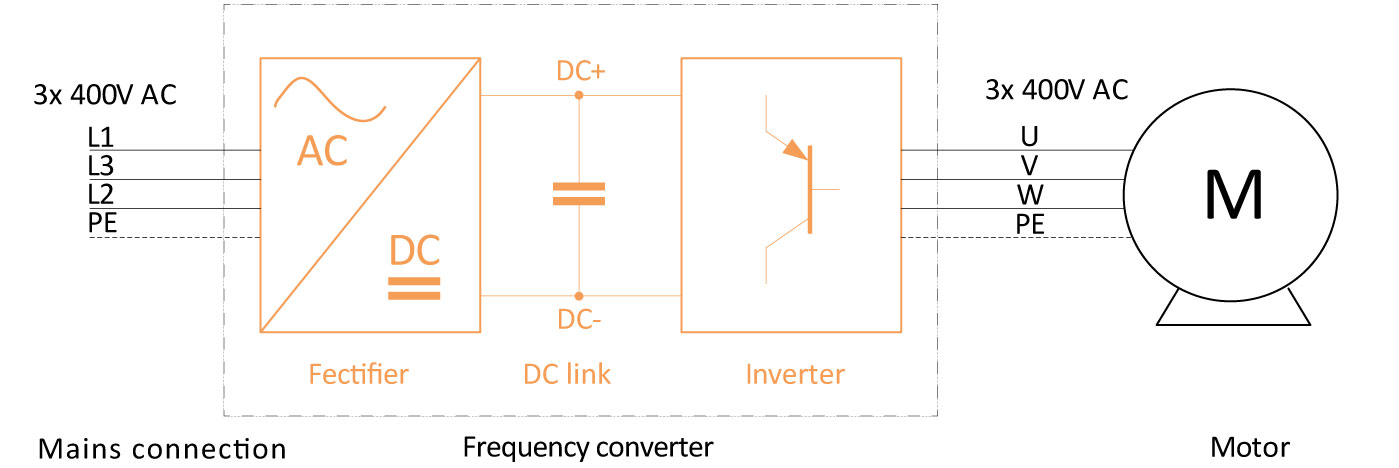
A frequency converter (AKA variable frequency drive) is a device that generates another alternating current with a different frequency and/or amplitude from an alternating current. A frequency converter typically consists of three components:
Rectifier → the input mains alternating voltage is converted into a direct voltage here. This is normally done with a semiconductor bridge rectifier.
DC intermediate circuit → intermediate voltage (= direct voltage) from which the inverter is supplied. Components for signal filtering are often found in the intermediate circuit to, for example, comply with the normative limit values regarding electromagnetic compatibility.The typical intermediate circuit voltage for a three-phase connection is 565 V DC.
Inverter → semiconductor switching elements, e.g. transistors, that are controlled by pulse-width modulation (PWM for short). Any current sequences can be mimicked by “skilful” control of the switching elements. The current at the frequency converter output supplies the electric motor and is an alternating current with a sinusoidal course and variable frequency.
What is pulse-width modulation?
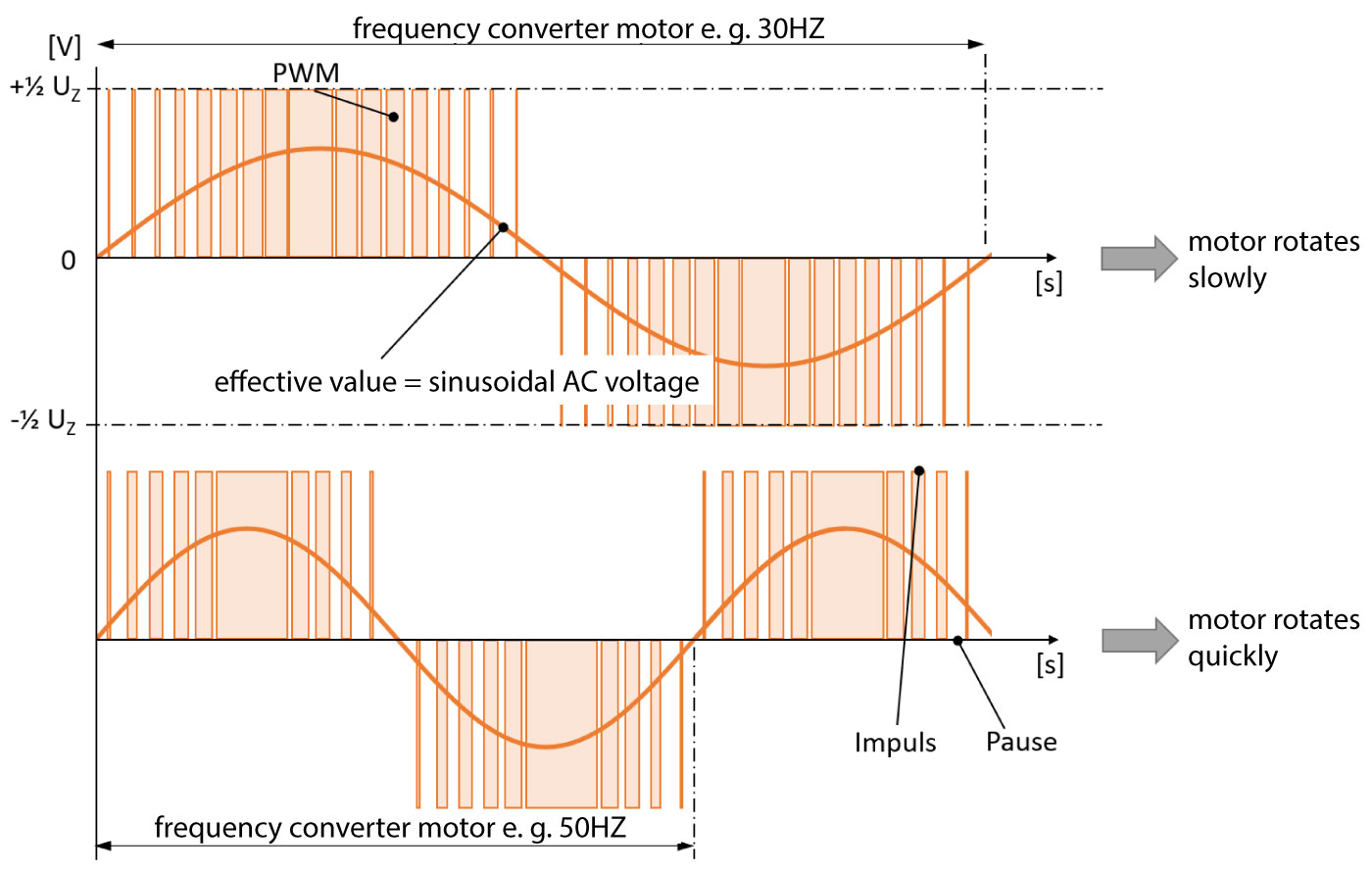
Pulse-width modulation is a square-wave signal with a constant pulse duration, which oscillates between two constant voltage values (in our example, half the intermediate circuit voltage +/- 1/2*UZ). The duty cycle, i.e. the ratio of pulse width to break width, varies here. Depending on the variant, different signal forms can be imitated. If an effective value is formed from the “hacked” PWM signal, the signal form corresponds to a sinusoidal alternating voltage.
The major advantage of PW modulation is the high efficiency, as the transistors can be operated in efficient switching mode. In contrast, operation in amplifier mode would be more technically complex and generate more losses, as too much power would be converted into heat.
Incidentally, inverters for PV systems, digital Hi-Fi amplifiers and speed controllers for brushless motors in RC model construction also work according to this principle.
What is special about our ÖLFLEX® VFD or SERVO cables
Alongside the described benefits of variable speed control and the high saving potential, the PW modulation explained above unfortunately also has undesirable side effects. As a result, high voltages are switched from plus to zero volts within a few nano seconds. In the switching process itself, transients are formed, which can spread through electromagnetic couplings within the system, but also within our ÖLFLEX® motor cables. These high-frequency interference currents can stray through the factory earthing system and have a negative impact on the transmission quality of, for example, parallel data cables. However, these problems can be avoided through special cable designs, special insulation materials, and installation by trained specialist personnel.
Outlook – which new developments are in the pipeline?
In today’s day-to-day industrial environment, almost all motors are controlled using frequency converters. The number of these drive trains will increase sharply, particularly in the small power classes. One reason for this is the low price, which makes gears for multi-axial drives unprofitable. In addition, logistics and handling applications increase the need for small drives and frequency converters.
In terms of technology, there are new developments in the field of semiconductors. For example, the innovative silicon carbide transistors (SiC) can be used to significantly reduce energy losses within frequency converters. This means that devices in the same power classes can be constructed much smaller in the future, as less heat loss needs to be discharged.
In the last few years, sustainability has become a buzzword that we encounter everywhere. For LAPP, however, sustainability is not a trend, but a duty. In order to further advance the topic, a central position was created in LAPP Holding AG in the spring of 2022. The LAPPConnect editorial team spoke with Global CSR Manager Maria Dobritzsch.
Maria Dobritzsch, CSR manager at LAPP
Why was this new position created?
Maria: Sustainability is firmly anchored in LAPP’s thinking and actions. And currently there is a lot of movement in this area. The legal requirements are becoming more and more extensive and complex, our customers are increasingly demanding information on our sustainability goals, and our banks are also taking our sustainability performance into account when calculating interest rates and carrying out risk assessments. The newly created position centrally manages the topic of sustainability at LAPP.
How sustainable is LAPP already today?
Maria: Sustainability has been defined as one of the five breakthrough goals of our corporate strategy. The focus of our activities is on our products and their manufacturing processes. Here, the carbon footprint plays an important role. To calculate this, LAPP Product Management recently introduced its own software. The goal is to reduce the CO2 footprint by 20% by 2025. Our resource management plays a major role here, as copper is responsible for the majority of CO2 emissions in the production of our cables. It is therefore particularly important that we pay attention to low-carbon production of the copper. To this end, we are in close contact with our copper suppliers and find out how their production and supply chains are set up. In addition, the colleagues look at other components of the cable. For example, they examine the sheathing and check whether bio-based composite materials or recycled plastics can be used. It is always important that the quality of our products remains guaranteed.
What has LAPP already done in recent years to address the issue of sustainability?
Maria: A lot has already been done. For example, analyses have been carried out on the subject of “green copper” and data collected on our copper purchasing throughout Europe. We’re picking up where we left off and want to continue this process globally. Our national companies are not idle either. Some have replaced old light sources and used LEDs in recent years, while others are relying on photovoltaic systems.
At our production site in Bangalore (India), 90% of the electricity required is covered by our own photovoltaic system. Speaking of electricity, we consistently purchase green electricity in Stuttgart.
How are employees motivated to be more sustainable?
Maria: In previous months, we have carried out various campaigns to raise awareness of sustainability among all our colleagues. At our global Learn Challenge at the end of 2021, we collected many ideas. For example, we focused on climate change and social sustainability. Another special highlight was the Sustainability Hackathon at the beginning of the year. Here, interdisciplinary teams worked on various issues related to sustainability. Exciting ideas were discussed, such as awarding an internal sustainability prize.
Is there a particular goal we are working towards in terms of sustainability?
Maria: My big goal is to be able to present a regular sustainability report for the entire Group. The first step is a kick-off workshop in Stuttgart and the establishment of a sustainability steering group. The plan is for this committee to bring together colleagues from different areas of the company on a regular basis to define sustainability goals for the company and to initiate projects. Another essential building block for comprehensive sustainability reporting is the introduction of suitable software. This will take place before the end of 2022. Finally, it is becoming increasingly important to define, collect and evaluate sustainability indicators. For example, water and energy consumption, waste volumes and gender ratios can be used for this purpose. Initially, the software will be tested at the Stuttgart site. In the long term, a global rollout is planned. We aim to present the first sustainability report for Germany as early as the end of 2023.
Skyscraper cleaning and maintenance staff rely on the high-quality facade access systems from Manntech. Manntech is part of the Alimak Group and provides innovative, tailored facade access solutions worldwide. When it comes to electrical cables, a partner is required who offers durable and high-quality products for harsh and demanding environmental conditions. Manntech relies on LAPP as the trusted brand of choice.
Share
Manntech is developing a sophisticated, customized solution for facade maintenance of the Porsche Design Tower.
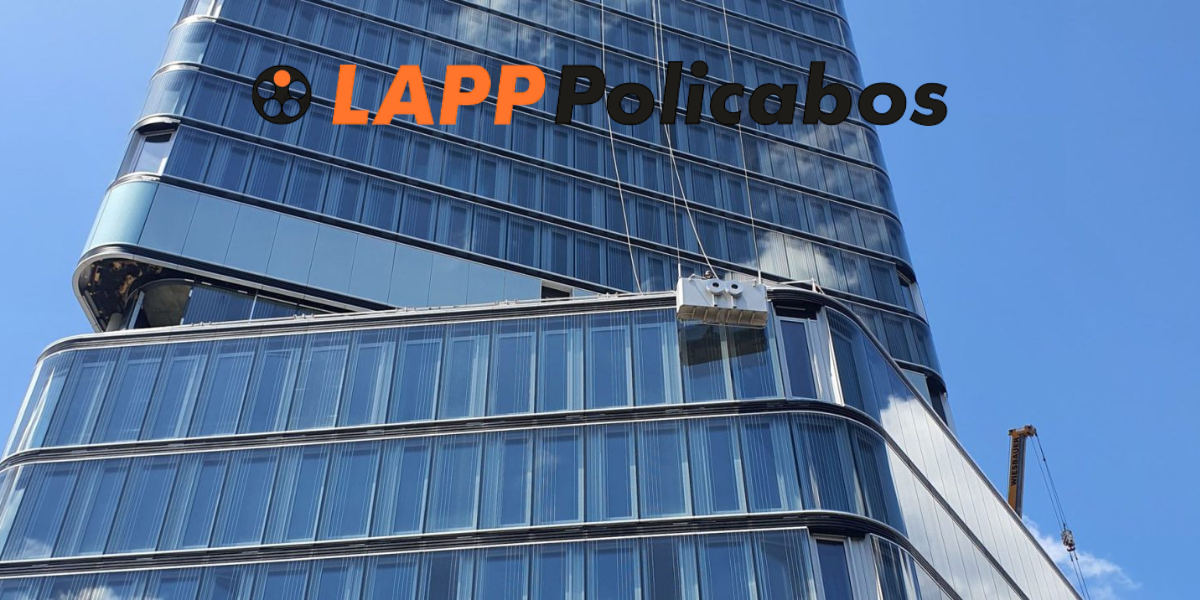
If you have a fear of heights, this job is not for you: window cleaner working at the Porsche Design Tower in Stuttgart. The high-rise building reaches a height of 90 metres, with 25 floors housing offices, restaurants, a hotel, and a bar with spectacular view of Stuttgart’s Killesberg and the Neckar valley. On the tenth floor, you can find a terrace that visually breaks the glass front. This architectural feature is a challenge for maintenance personnel. Conventional work platforms, which are lowered from the roof, would touch down on the terrace, and a transition to the lower floors would not be possible.
Tailored solutions for challenging facades
The solution: a stationary building maintenance unit with a double telescopic boom and a guided cable system anchored to the roof of the building. This allows the facades of the upper and lower parts of the building to be reached separately. The sophisticated design was developed and constructed by Manntech. Founded in 1953 by Mannesmann, the company is a specialist in high-quality and tailored solutions for facade construction and building maintenance – wherever standard systems do not work, such as in the case of high-rise constructions, facades with numerous projections and recesses, slanting or aspherical roofs. The product range includes facade access systems, facade lifts, cross-transfer carriages, ladders, lifting tables, abseiling systems, fall-protection systems, scaffolding and much more.
Around a hundred such systems leave the Manntech plant in Mammendorf every year, destined for buildings all over the world. The company has been part of the Alimak Group since 2017. “Our solutions allow customers to clean, service and maintain buildings in a cost-effective, safe and unobtrusive manner,” says Gerhard Zeitler, Head of Sales at Manntech. “We are not the biggest player in the industry, but we aspire to be the best – we are the technology leader in our field.”
The Porsche Design Tower in Stuttgart is 90 meters high and allows a spectacular view.
Sensors for safe and efficient maintenance
This makes Manntech a pioneer in remote and predictive maintenance. Sensors report constantly from anywhere in the world on where the rig of the facade access system is located and its movements. This allows the building cleaner to drive along the facade and digitally record any detected damage. In the past, they would have had to write this down on a piece of paper, indicating the rough position. Now, technicians immediately find the place and can repair the facade.
Manntech is also popular with architects because the systems are known for not disrupting the aesthetics of the design. For the World Trade Center in Abu Dhabi designed by Norman Foster, the company produced rails that can be mounted on the roof despite its 55-degree inclination. The rails were measured using a laser, whereby everything needed to be accurate down to the millimetre, and special cooling is also required. Manntech was the only supplier who was able to meet the architect’s design and technical requirements. It took 60 weeks of development work, and everything was tested using prototypes. The system is equipped with sensors with absolute value measurement. This means that it is always possible to see exactly where the rig is located and how it is moving. This provides a significantly higher level of safety for the maintenance personnel.
Expertise and impulses from LAPP
Systems such as these need to function without failures for many years, even in the face of wind, weathering, and high levels of UV radiation. After all, human lives depend on it. Replacing defective components is very difficult and time-consuming. Each country also has different requirements and standards. When looking for suppliers, they can therefore only consider partners who can offer robust quality and tailored variety. When it comes to cables, Manntech relies exclusively on LAPP. ÖLFLEX® cables, UNITRONIC® data cables, various plug connectors and cable conduits are the most common products. “We value fast communication”, commends Richard Horkavy, Head of Development at Manntech. “Our contacts at LAPP always have an open ear and can quickly find a custom solution that fits our requirements.” Manntech also expects suppliers to take the technological lead. “We are open to impulses and innovations”, says Horkavy, “we can learn a lot from LAPP’s expertise, for example when it comes to efficient warehouse processes in production and assembly.”
Manntech relies on durable and high-quality products from LAPP and appreciates the joint cooperation.
Facade access system for a World Cultural Heritage
The next opportunity for this is a very challenging new project, where Manntech is once again relying on solutions from LAPP. Manntech is currently constructing a maintenance and access system for one of the most famous bridges in the world in Australia. The bridge is a World Cultural Heritage that must not be changed. Drilling new holes into the bridge structure is not permitted. The installation is therefore set up on the bridge and held via 1400 special bolts. It consists of two motorised gantries, two different access units for a total of six available cradles, two drive bogies and two material trolleys. Sensors ensure safety and communication. “In Mammendorf, the bridge was replicated and tested at different temperatures and wind speeds,” reports Dieter Eichler, Plant Manager at Manntech. Another challenge is the colour of the maintenance and access system: it must be adapted precisely to the shade of the bridge. Also in this project, Manntech can meet its customer’s aesthetic and technical requirements and offer a solution that enables maintenance work to be carried out efficiently and safely.
“Such exciting projects make collaboration with Manntech extremely attractive – for both partners,” says Markus Schreiber, Account Manager at LAPP. On the one hand, LAPP’s expertise and brand products, from ÖLFLEX® to HITRONIC®, support the implementation of innovative and sophisticated safety solutions. On the other hand, LAPP is learning a lot from Manntech about future application requirements such as data acquisition and transmission under challenging conditions. Markus Schreiber explains: “This is a great partnership. We still have a lot of plans together for the future.”
Originally, the North German family-run company Thomas GmbH + Co. Technik + Innovation KG produced bedroom furniture. However, as supplied glass fibre strips do not meet the high requirements, the company manufactures its own pultrusion machines for itself and other companies. The latest and particularly innovative pullCUBE machine incorporates assembled cable chain systems from LAPP – a guarantee of the desired robustness, quality, and durability.
Managing Director Boris Thomas demonstrates the pullCUBE pultrusion system
In 1981 even Udo Lindenberg sang the song “Sandmännchen” from the “Schlafbehörde” in Bremervörde. This meant Thomas GmbH + Co. Technik + Innovation KG (TTI): The North German family-run company made its international breakthrough in 1956 with the invention of the slatted frame, leading it to prominence in pop culture. The approach to rock music fits in with TTI: “Rebellion against the status quo is part of the family’s blood, and from this comes a drive for innovation”, says Managing Director Boris Thomas, who is now running the company in the third generation. At the end of the 1990s, TTI opened its own mechanical engineering division specialising in pultrusion, an automatic process for producing fibre-reinforced plastic profiles. In this process, dry fiber reinforcements are drawn through a resin bath and cured with the aid of heat before being cut to size as a finished profile. In this way, the company aims to become independent of suppliers when it comes to profiles for its laying systems and to ensure higher quality. Today, TTI is using the pullCUBE to build the world’s shortest pultrusion machine. Companies all over the world are interested in the innovative machine, so TTI is building it in series. This has consequences for the subcontractors: “We don’t see ourselves as a factory, but rather want to offer the consistent level of quality and robustness of series production”, emphasises Boris Thomas. TTI therefore purchases the cables and connectors for the pullCUBE ready assembled in the cable chain from the global market leader for integrated connection technology, LAPP.
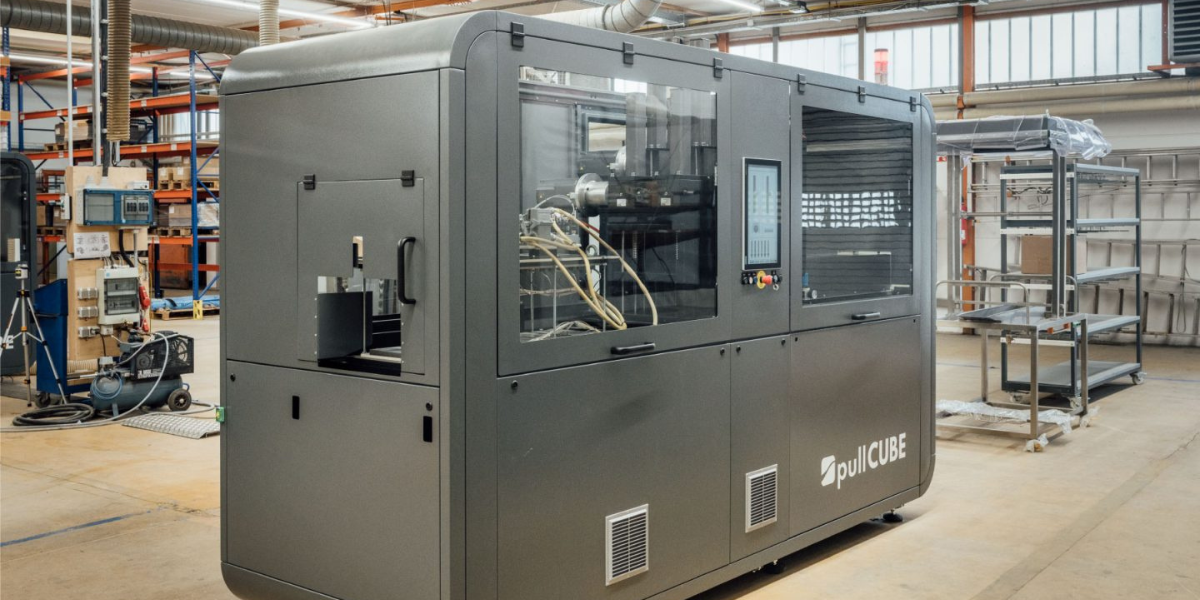
At 3.5 meters, the pullCUBE is the shortest pultrusion machine in the world
From slatted frame to mechanical engineering – and always rebellious
TTI, that is now a modern production plant with several parts of the building, has its headquarter in the middle of rural Bremervörde, between woods and residential buildings. The workshop of furniture carpenter Karl Thomas, founder of the family company, stood here back in 1935. At the time of the Second World War, he joined the socialist youth workers, was imprisoned for this and the workshop was closed for a long time. “My grandfather was a rebel, and this has consistently affected the entire family since then”, says Boris Thomas smiling. In the post-war years, the Thomas family and their employees channelled their urge for rebellion into technological innovation. In 1956, the company invented the slatted frame, known as “Lattoflex”. At the end of the 1990s, TTI continued to improve this concept and developed the wing spring – an even more ergonomic laying system made of glass fibres and plastic instead of wood. However, the supplied glass fibre profiles prove not to be robust enough. Customers complain about broken bars – the birthplace of mechanical engineering at TTI, which now builds pultrusion machines to produce its own glass fibre profiles and sell them to third parties. 2008 is the year of TTI’s next revolution: for the first time, the patented radius pultrusion process can be used to produce bent glass fibre profiles. A moving mould instead of the usual rigid mould makes this possible. As components made of glass fibres and composites are playing an increasingly important role in many industries, there is a great deal of interest. For example, the American sports car icon Chevrolet Corvette in the eighth generation carries a curved front bumper created at TTI. In 2020, TTI finally presents its latest innovation: the pullCUBE combines all the company’s pultrusion know-how in one compact machine – the shortest of its kind.
TTI relies on assembled cable chain systems from LAPP for the development of the pullCUBE
The shortest pultrusion machine in the world is flexible, safe, and efficient
A pullCUBE, which was just built for a customer at TTI, stands in the middle of the factory hall: With its rounded corners, the full cladding in the bottom and the glass windows in the upper half, the machine looks like a design item. The shortest pultrusion machine in the world also offers practical advantages for users. The pullCUBE, which is just 3.5 metres long, including the mould, the gripping unit and an accompanying disc saw, can be transported very easily – all that is required is a forklift to load and unload the transport vehicle. And as everything is installed in one housing, there is no need for on-site assembly. The completely enclosed system is also a safe system that is unique in the world, as operators of the system cannot reach the grips, saw or hot surface of the mould with their hands. The compact dimensions also make it easier to position the machine exactly where it is needed, instead of having to look for where there is enough space for a conventional pultrusion line, which is at least 15 metres long. The pullCUBE is not only more compact but also more efficient than conventional systems, as it does not require a cleaning cycle. This means nothing is wasted on the profile, which enables users to save up to €144,000 per year with 200 days of production. In addition to these practical advantages, the design and user experience also played a major role in the development: “We focused a bit on the iPhone when designing the pullCUBE”, explains Isabell Ruröde, Operations Manager at TTI. “This includes the shape of the housing, but also the touch control panel with intuitive user guidance. This makes operation easy for all users, from beginners to professionals. And the device is very smart in the production environment. It looks just as valuable as it is”.
The pullCUBE offers unique safety due to its closed system as well as easy operation through a touch control panel
Suits TTI: LAPP supplies solutions rather than just components
Because TTI also builds the pullCUBE for other companies and therefore has particularly high demands on the quality and reliability of the machine, choosing the right partners was an important factor for the company: “At TTI, we see ourselves as a solution provider. Our customers do not just get a machine from us, but also our pultrusion expertise in the form of advice and support for their entire process. This is something we are looking for in our suppliers”. With LAPP, the right partner was found for connection solutions such as cables and connectors for the pullCUBE. TTI sources ÖLFLEX® cables, EPIC® connector components, SKINTOP® cable glands, SILVYN® cable protection and supply systems, as well as FLEXIMARK® marking systems from the Stuttgart-based company. LAPP supplies the components ready for installation to the assembly group for the movement axes of the saw, saw trolley and tool trolley on the pullCUBE. LAPP has been offering cable and cable chain assemblies as a service for many years, with a product range ranging from customised cable assemblies and servo assemblies according to common standards to fully assembled cable chains with electrical, pneumatic, hydraulic and steel construction.
LAPP experts analyse the customer’s requirements, develop proposals for optimising the connection solutions, create concept drawings and compile material lists. Based on this, LAPP arranges cable assemblies according to requirements. All the customer has to do is mount them in the intended location and plug them in. Thanks to quality control at LAPP, flawless operation is guaranteed immediately. Sebastian Achatz, Business Development Manager ÖLFLEX® Connect at LAPP, is delighted with the highly professional collaboration with TTI: “From the very beginning, TTI wanted to have a single-source supplier of cable chains for the pullCUBE. With our broad portfolio and our modern plants, we at LAPP can deliver ready-to-install cable chain assemblies of consistently high quality on request. All individual components are precisely coordinated with one another. This reduces assembly and process costs and enables TTI to concentrate entirely on its core competence – the development and assembly of pultrusion machines.“
EPIC® industrial connectors enable the safe connection and disconnection of cables
Two technology leaders at eye level
This simplifies the production of the pullCUBE and ensures consistent quality, but Boris Thomas experiences also further advantages of working with LAPP: “We are always looking for long-term partners that we know and who know us, who will help us to develop and further develop our products and who are technologically at least on par with us. This was precisely the decisive factor in our decision to work with LAPP”. Peter Engwer, Project Manager Applications & Cable Chains at LAPP, managed the project with TTI in the in-house technical department, selected the individual components, defined the material parts list, and created the production drawing. He is delighted with the joint success: “The pullCUBE is a fantastic machine that is really making international waves. With our assembled connection solutions, we are doing our part to ensure that TTI can offer its customers the desired quality”. Boris Thomas is also very satisfied with the collaboration and the connection solutions supplied: “This gives us the confidence that we have the ideal technology, we are benefiting from LAPP’s expertise in our development, and when you set up the machine, the cabling simply looks really good and professional – which is also a factor of our design requirements”.
Sebastian Achatz, Business Development Manager ÖLFLEX® Connect at LAPP, in conversation with TTI Managing Director Boris Thomas
In the smart factory, machines and systems are increasingly networked. As a result, the topic of electromagnetic compatibility (EMC) is also becoming increasingly important. Especially in industrial plants where frequency converter-controlled motors are used, undesirable currents can increasingly occur on the equipotential bonding (PA) or protective earth (PE) cables. A new, innovative cable design from LAPP reliably reduces leakage currents and makes a decisive contribution to improved EMC in machines and systems.
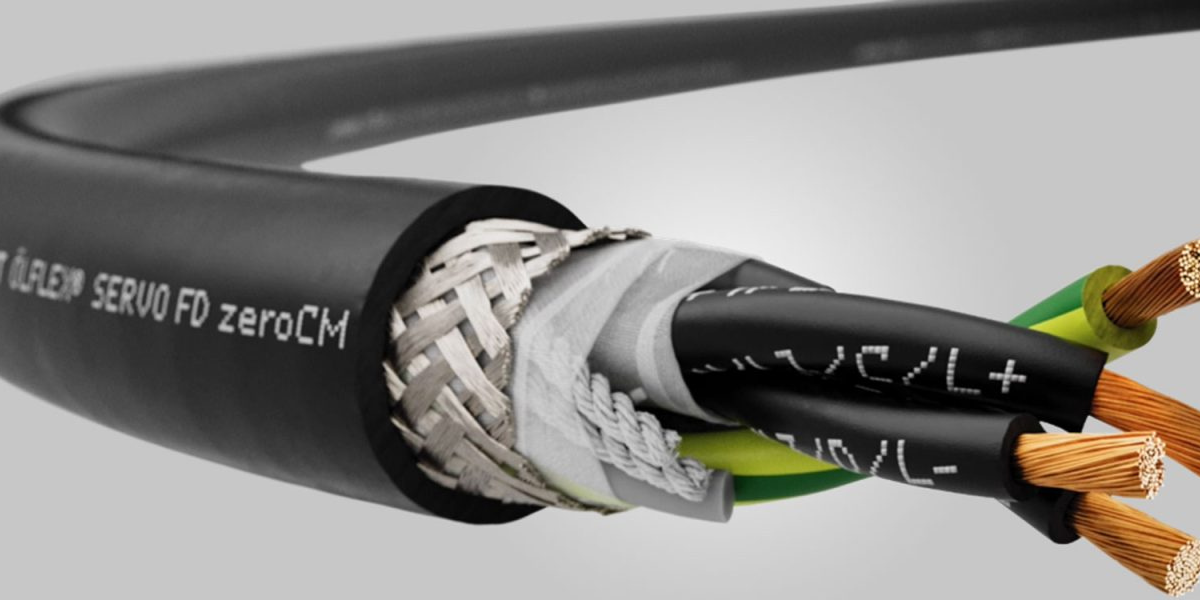
Stripped ÖLFLEX® SERVO FD zeroCM
Nowadays, electric motors in process automation are operated exclusively by means of frequency converters. In addition to the advantage of variable speed, this type of control offers considerable improvements in terms of energy and process efficiency. However, due to the principle of control, undesirable side effects occur and leakage currents are generated. The more components are involved, the greater the risk of such disturbances. At the same time, the installation spaces in machines and systems are becoming smaller and smaller. In order to avoid expensive production downtimes in the smart factory, it is therefore best to consider the topic of EMC during the planning phase.
Cable design rethought
LAPP has just demonstrated how interference within connection solutions can be virtually eliminated as part of the “PEPA” research project of the German Federal Ministry of Economics and Climate Protection. In addition to LAPP, the companies SEW-EURODRIVE, BLOCK, Danfoss, MAGNETEC and the Technical University of Darmstadt are involved in the project. Here, LAPP is leading work package 4: Couplings between neighboring cables as well as with plant components. Measurements and optimizations of the cable design. The aim of this work package is to promote cross-company research on a complex topic from the automation/drive world, in which the correct selection of connection components and their professional installation are particularly important.
Typical spectrum of leakage currents measured on protective earth and equipotential bonding conductors.
The subject of the investigation was the question of why undesirable currents very often occur on the potential equalization lines (PA) or protective earth lines (PE) in industrial plants in which frequency converter-controlled motors are used. Due to the clocked control (pulse width modulation), interference currents in the range of about 3 kHz to 1 MHz are excited, which flow off via housing parts, PA/PE conductors/networks and, in the worst case, via the shielding of data lines in the direction of earth potential or to the source. High-frequency equalizing currents with an amplitude of 10 A or more are not uncommon. The consequences are inadmissibly high currents on the protective earth and thus supposedly faulty tripping of residual current circuit breakers (RCD) or impairment of data communication if, for example, the equalizing currents flow over the copper shield of a data line. These faults are difficult to find because they do not follow a systematic approach. LAPP has therefore set itself the goal of investigating the physical coupling mechanisms within motor connection cables and deriving a new type of cable design from this. The result of this development is zeroCM® technology.
Cable technology put to the test
The origin of the innovation was to put the status quo in cable technology to the test: previous designs tended to be trimmed to small outer diameters and optical symmetry. Until then, the problem of EMC was always solved by shielding. LAPP took a different approach with zeroCM technology: the cable is visually asymmetrical, but 100% electromagnetic symmetry is achieved. Ultimately, this means that even less shielding is required.
The secret of zeroCM® technology is a special, innovative stranding technique: Three phase conductors are arranged symmetrically and stranded in an inner layer. In addition, at least one protective conductor is stranded in an outer layer with opposite stranding direction around the three phase conductors in a specific lay length ratio. The insulation of the conductors is capacitance-optimized and consists of polyethylene, polypropylene or a foamed variant. Between the inner layer and the outer layer there is a separating fleece. This design achieves perfect electrical symmetry, which reduces magnetic radiation and greatly reduces internal couplings. The first prototype cable with a new cable design is the ÖLFLEX® SERVO FD zeroCM. It is especially suitable for use in conjunction with frequency
converters.
Successful trial
The effectiveness of the new ÖLFLEX® SERVO FD zeroCM cable was confirmed in test setups at the project partners as part of the PEPA research project. In addition to investigating an EMC-optimized installation of components, the role of the output line was evaluated, among other things. For comparison, an identical test setup with a drive system with potential equalization as well as parallel signal line (ProfiNet) were selected. A shielded PVC-insulated standard cable, a low-capacitance servo cable, a symmetrical motor cable with three protective conductors and the new zeroCM® cable with optimized structure were compared. The results were clear. The best values in terms of leakage current at the converter output were achieved by the low-capacitance design of the zeroCM® cable. The generated leakage currents represent an additional load for the frequency inverter and all components involved and should therefore be kept as low as possible. Furthermore, the interference current flowing via a parallel signal line was investigated: Here, too, the use of the zeroCM® cable favors the expression of the lowest possible interference currents. The investigations at the project partners also resulted in clear recommendations for the EMC-optimal installation of frequency converters, such as a low-impedance, RF-compatible and continuous equipotential bonding between the frequency converter and the drive. The shield connection with EMC-compatible plugs or flat shield connection, such as with the SKINTOP® BRUSH EMC cable glands used, is of major importance here.
Leakage current (rms and maximum level) measured at the frequency inverter output for a 4 kW drive and 50 m cable length
Longer cable lengths possible
In summary, zeroCM® technology does not eliminate the cause of EMC interference, but it does address precisely one of the significant points at which interference is introduced into the system environment. On the one hand, the new cable design enables equalization currents to be reduced by up to 80% at the frequency inverter output and on parallel paths such as data lines. On the other hand, reduced cable-charging currents ensure reduced load on and in the inverter itself: For example, longer cable lengths can be laid without operating the frequency inverter outside its (EMC) specifications. In addition, zeroCM® technology prevents the occurrence of voltage levels on the ground/earth potential (ground voltage) on the consumer side. This is particularly important when, for example, sensitive sensor technology such as analog encoders are used.
Although the new cable may seem unfamiliar when it is first assembled, the cabling remains as simple as usual, or the effort is even reduced compared to the ground-symmetrical cables with a third of the protective conductor. LAPP’s goal is now to equip a portfolio with zeroCM® technology; hybrid lines are next.
The measurement curve shows conducted interference emission of a frequency inverter according to DIN EN IEC 61800-3 and the improvement when a zeroCM® servo cable is used.
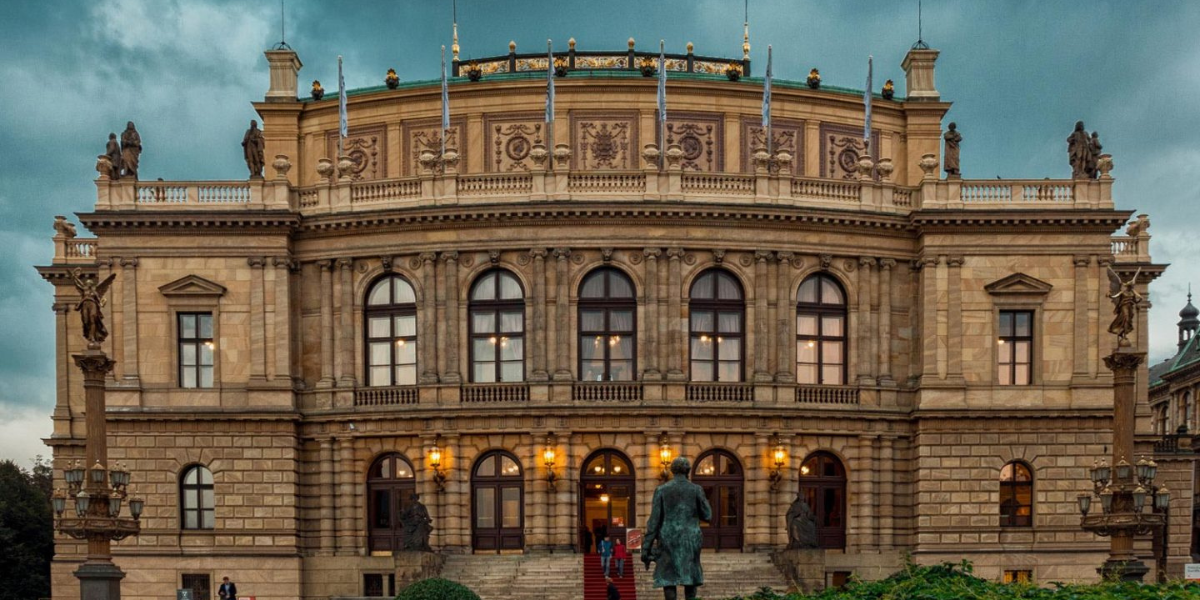
There are many classics on the programme of the Prague State Opera this winter 2021/22: from Puccini’s Tosca and La Bohème to Verdi’s Rigoletto and the wonderful ballet Romeo and Juliet. The opulent productions on the stage are only possible thanks to new stage technology that has been realised using connection solutions from LAPP.
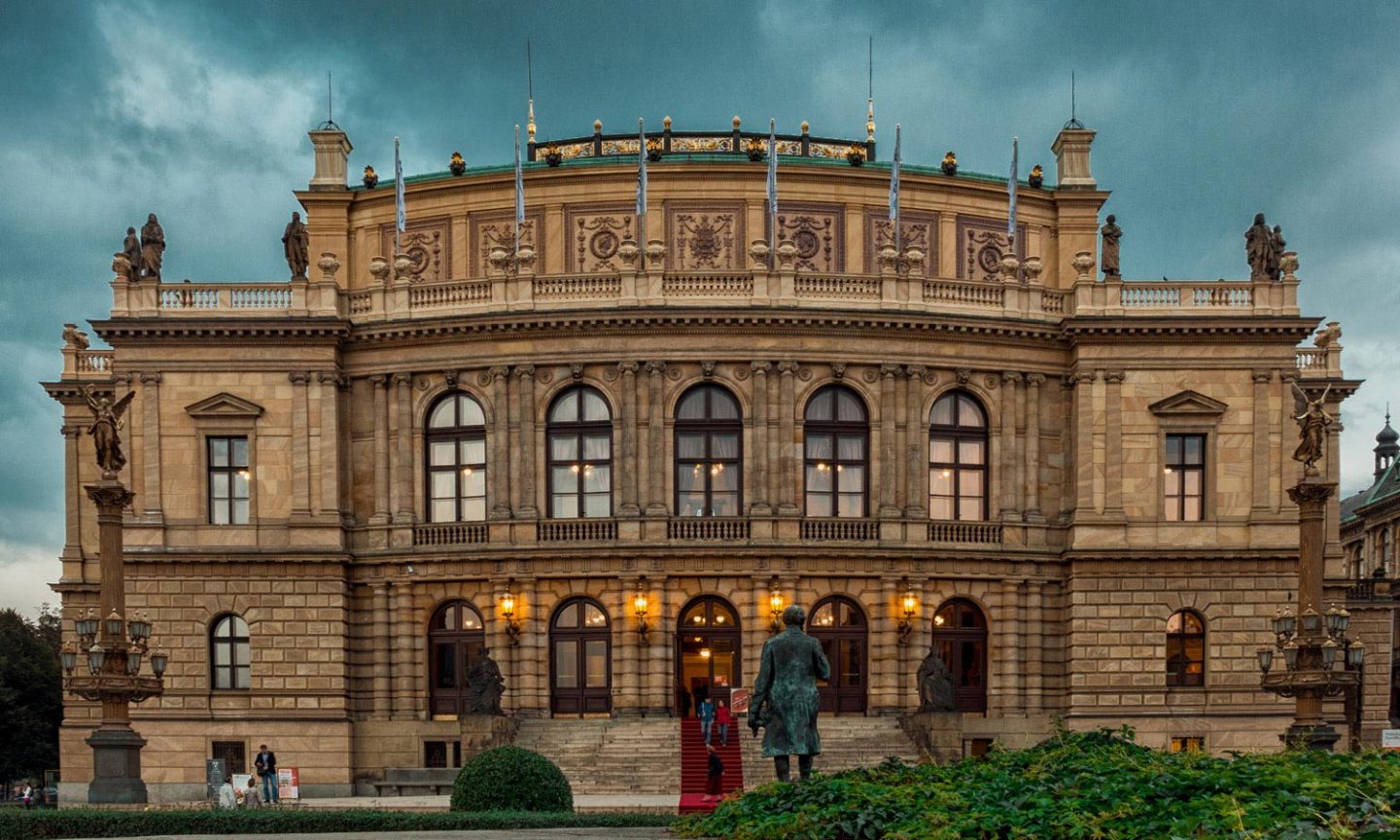
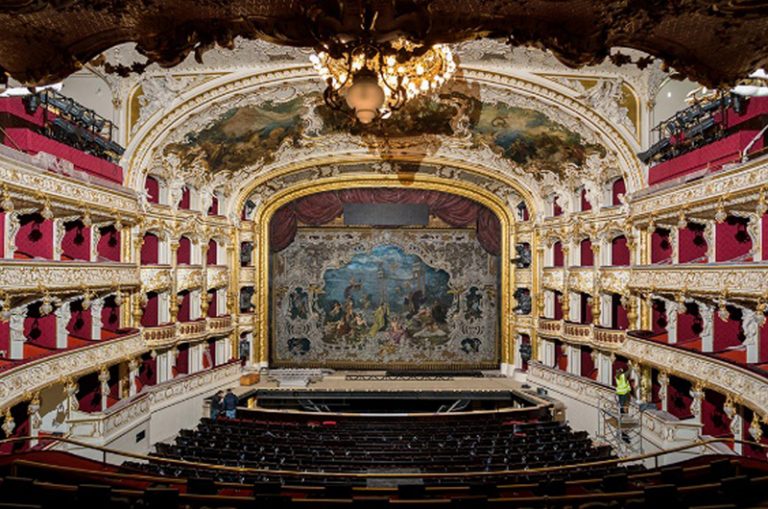
Prague State Opera
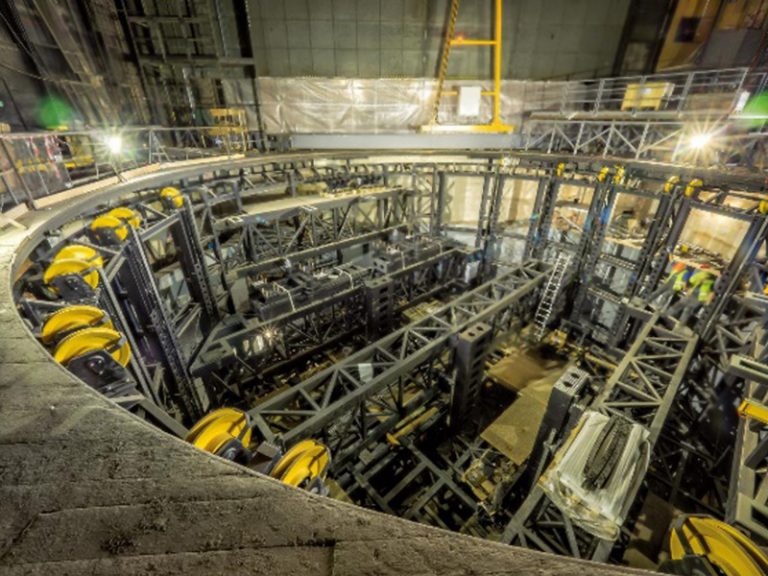
The Prague State Opera is one of the four venues of the Prague National Theatre and counts among the most important opera houses in Europe. The historic building was thoroughly renovated in the 1970s. Now it was time for the stage technology. The extensive retrofitting work began in March 2017. The plans included a unique revolving stage, a modern rehearsal room with excellent acoustics and seats equipped with readers to display sub-titles in various languages.
New opportunities with new revolving stage
The main focus was on the new revolving stage with unique technical options for the opera house to expand its repertoire. “This is a unique technology in the Czech Republic, as the revolving stage and the scenery not only revolve, but can also be raised allowing even the individual tables to tilt,” said Prof. MgA, Director General of the National Theatre, Jan Burian, presenting the conversion plans.
Bosch Rexroth led the construction of this unique stage technology. The company decided to enter into partnership with LAPP Czech Republic s.r.o. The Czech subsidiary won the contract on the basis of its support, its reliable technical services and individual approach. Thanks to the high quality of the products and the broad portfolio ÖLFLEX® power and control cables, UNITRONIC® data cables, ETHERLINE® cables and components for network technology in buildings, ETHERLINE® cables for stage technology and EPIC® signal connectors were used.
Halogen-free cable types for increased safety
When selecting individual components for the Prague State Opera, great importance was placed on the safety of people. As a result, the individual installations mainly consist of halogen-free cables with CPR (Construction Products Regulation) classification according to Regulation (EU) No. 305/2011 (CPR). Lighting circuits, hydraulic brakes and spot lines are supplied using halogen-free ÖLFLEX® CLASSIC 130 H cables with improved fire protection properties. This type of cable is very well suited for installations within public buildings and industrial plants.
2-pair or 4-pair ETHERLINE® H Cat. cables are used for Ethernet-based communication. Depending on speed requirements, 5e cables are used to connect the individual system components. UNITRONIC® LiHCH shielded halogen-free data cables with DIN 47100 colour code ensure lower level communication and connect the RS485-based sensors and buses. Highly flexible cables are used to supply power and control to the moving parts of the revolving table. ÖLFLEX® CHAIN 90 P single-core, highly flexible cables are used wherever operating conditions require higher power and therefore larger cable cross-sections.
The theatre season with the new stage technology has now begun. And the audience is impressed – with the stage technology and many outstanding productions.
The formation of “Lapp Policabos”, the name by which we are currently recognized, had as its primary objective to respond to the needs of the Portuguese market in special and optical cables, not contemplated in the production programs of national manufacturers, essentially in the industrial area.
Since the company’s foundation almost 30 years ago, it has been growing safely and sustainably. Proof of this is the numbers presented, however, also the satisfaction of our customers with the quality of the products and the service provided.
At Lapp Policabos, we base all our work on the quality and professionalism with which we respond to the needs of those who seek us out.
The basis of the success of our mission is involvement and commitment, training and transparency towards all stakeholders, from customers to suppliers, without ever discolouring our employees.
In the future, we aspire to be a company in which its employees feel proud and vice versa because only by working as a team will we be able to succeed.