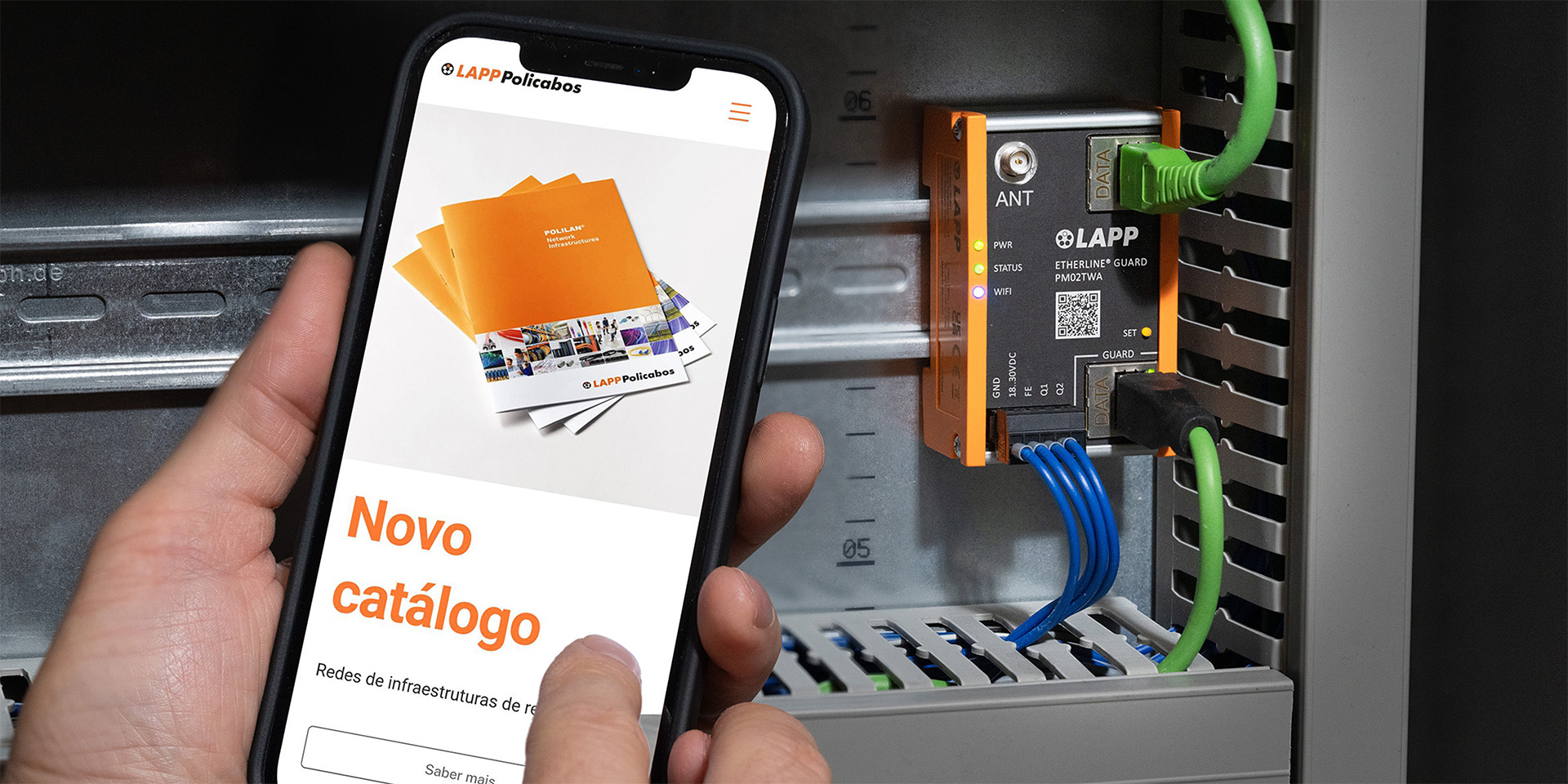
It is with great enthusiasm that we are pleased to present an exciting new feature for everyone – our long-awaited latest newsletter! We’re excited to share valuable information, industry trends, and updates directly in your inbox.
Stay informed about changes to our product price lists, ensuring you always have access to the latest ones.
Market News:
Keep abreast of relevant trends, developments, and events in our sector so you can make informed decisions.
Technical Articles:
Explore our technical knowledge through specialized articles to help you better understand our products and services.
How to join:
Join us on this journey of knowledge! To subscribe, visit our website and follow the simple instructions to secure your free subscription. Be ready to receive inspiration and valuable information directly to your email.
At Lapp Policabos, we believe that connection goes beyond physical cables. We’re here to connect you to the knowledge that drives the future.
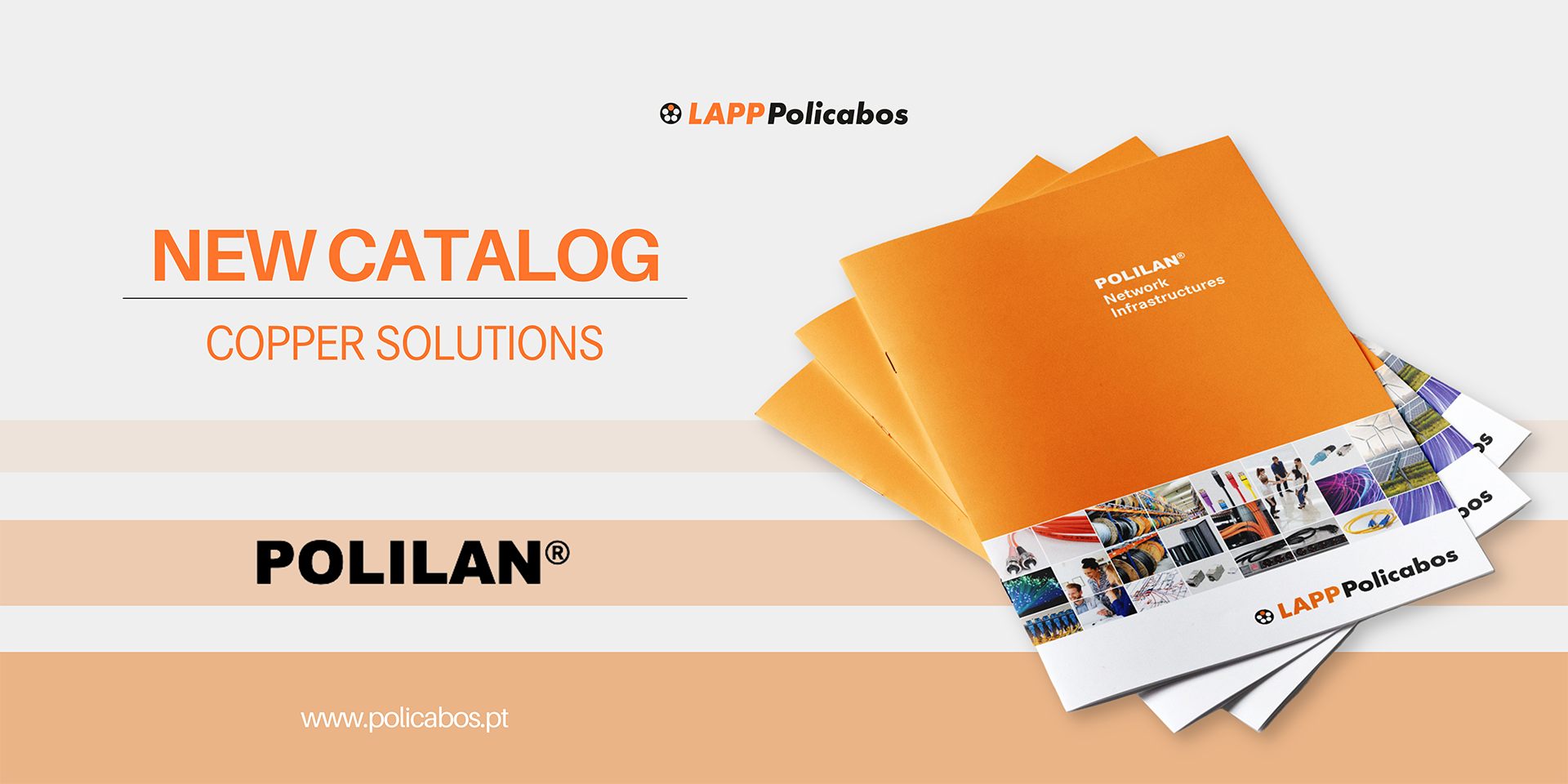
In this article, we will highlight the copper solutions featured in the new POLILAN catalog, which offers advanced products to meet the demands of modern communication networks.
Cat6 and Cat6A Cables: Ensuring Performance and Reliability
POLILAN offers a wide range of copper cables, most notably Cat6 and Cat6A cables. These cables are designed to provide impressive data transmission speeds and ensure the performance required in cable installations. With the increasing demand for bandwidth and faster transfer speeds, Cat6 and Cat6A cables are ideal choices for modern communication networks.
Different Armoring Types to Meet Specific Needs
We understand that every cable installation is unique and requires solutions tailored to your specific needs. That is why we offer different types of shielding on our copper cables. From unshielded to fully shielded cables, customers have the flexibility to choose the most suitable solution to ensure signal integrity and minimize electromagnetic interference. At Lapp Policabos, we are committed to providing versatile options to meet the challenges of modern cable installations.
Benefits of POLILAN Copper Solutions
By choosing POLILAN copper cables, customers enjoy several significant benefits. First of all, our advanced solutions offer impressive data transmission speeds, ensuring that communication networks operate efficiently and quickly. In addition, the ability to choose different types of shielding allows cable installations to be tailored to the specific needs of each project. Lapp Policabos is proud to provide technical solutions that meet the growing communications industry demands.
In the world of modern communication networks, reliable and high-quality solutions are essential. At Lapp Policabos, we are committed to providing technical solutions in the field of cable installations. With the new POLILAN communication network infrastructure catalog, we highlight copper solutions, offering advanced products that ensure performance and reliability.
Our Cat6 and Cat6A cables, with different types of shielding, give customers the flexibility to choose the solution best suited to their specific needs. Through advanced manufacturing techniques, our copper cables offer impressive data transmission speeds while minimizing interference and maximizing the efficiency of your installations. Trust Lapp Policabos to provide the copper solutions you need for your communication cable installations.
A motor cable (SERVO, VFD) contains three phase conductors and one PA, is capacitance-optimised and has braided shielding.
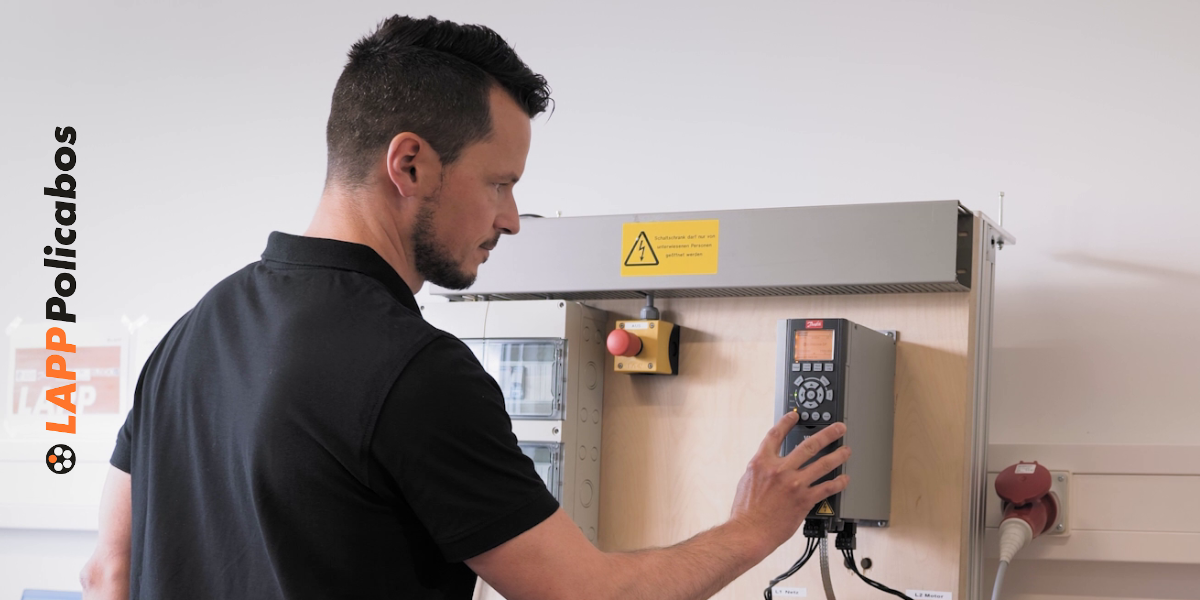
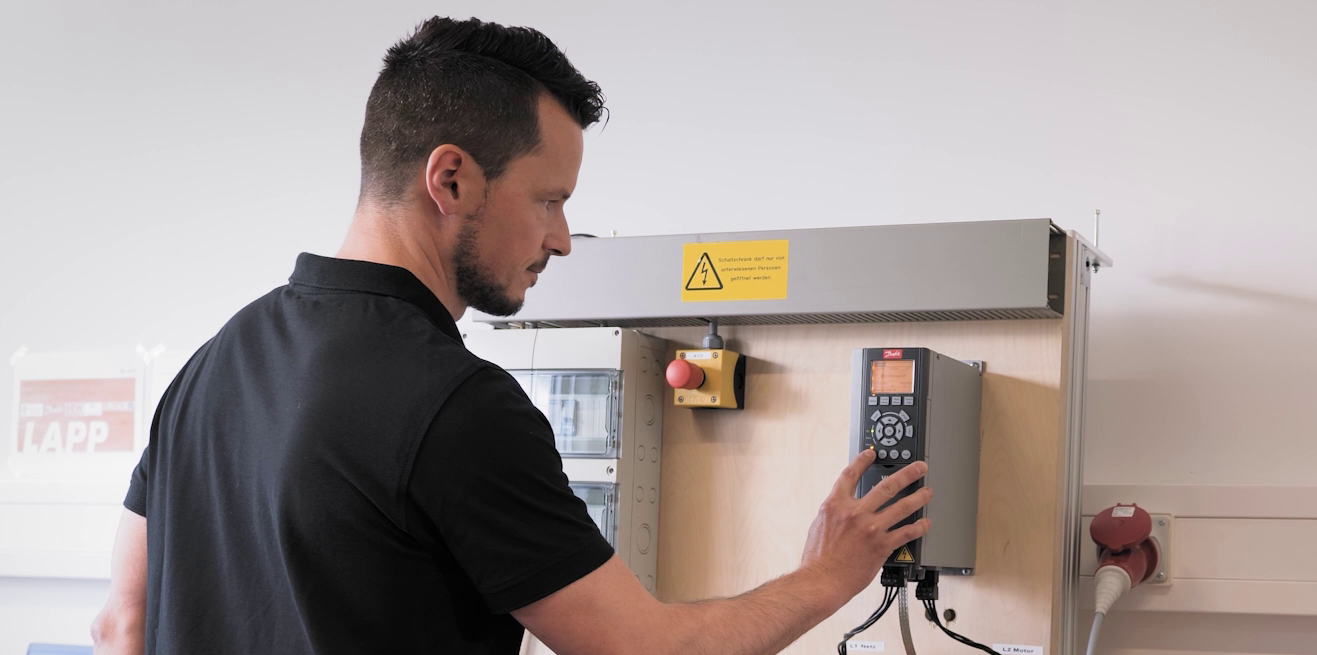
What is a frequency converter and what is it required for?
The introduction of frequency converters into industrial plants began in the early 1970s. Until then, it was only possible to operate electric motors directly on the grid and thus at defined speeds. If an electric motor, e.g. an asynchronous machine, is operated directly on the grid (50Hz), a fixed speed is set, known as the nominal speed, based on the grid frequency and the pole number of the motor. In the past, where different speeds were required due to the application, mechanical gears were used. Some readers may remember what was known as the “delta changeover”. This was used to limit the power of the motor at the moment it is switched on in the case of directly operated motors.
A frequency converter is required to operate an electric motor efficiently and at variable speeds.
What do variable motor speeds have in common with energy savings?
The option of continuously adjusting the motor speed offers an opportunity to save energy in many applications with different loads. For example, fans or pumps are only rarely operated at nominal power or speed. If a lower pumping capacity or conveyor volume is required, the frequency converter can easily reduce the power. Another advantage of using frequency converters (compared to motors that operate statically on the grid) is the improved process control of drives or machines thanks to the variable speed, which can often increase precision, quality and throughput.
Anyone who thinks that frequency converters can only be found in an industrial environment is mistaken. They have also long been used in the private sector. For example, frequency-converter-controlled motors with controlled speed can be found in kitchen machines, clothes dryers or heating or circulating pumps. Frequency converters are also found in electric vehicles in a modified form; however, they are operated with battery power, i.e. direct voltage.
How does a frequency converter work?
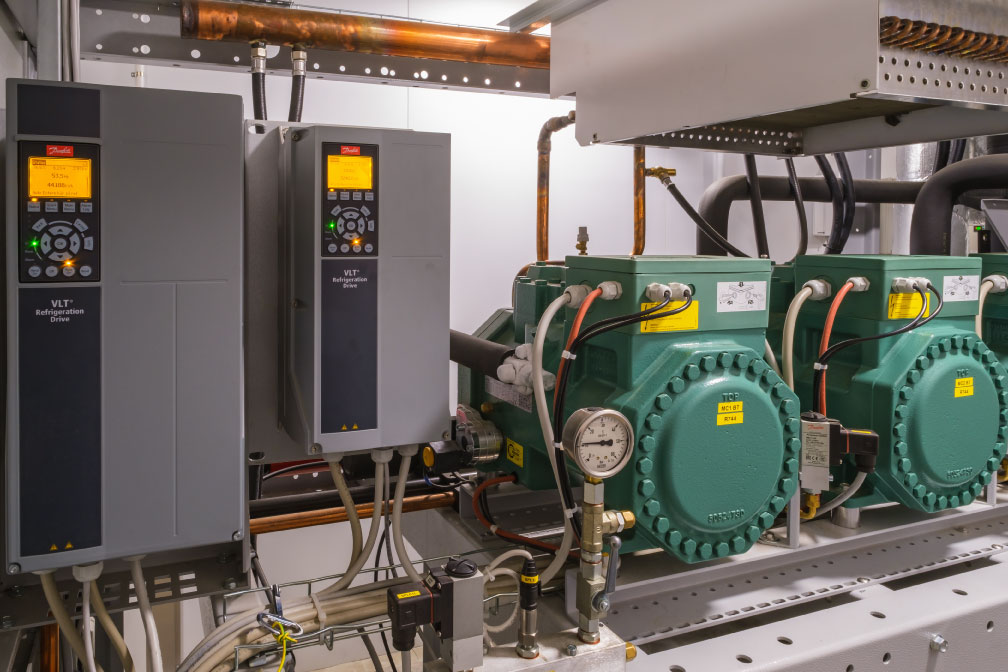
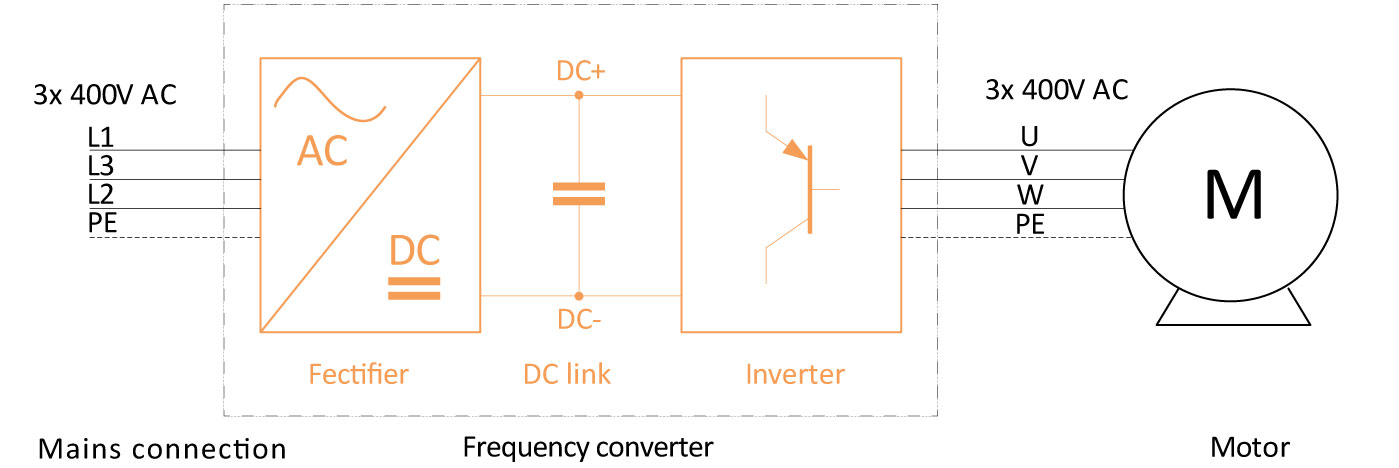
A frequency converter (AKA variable frequency drive) is a device that generates another alternating current with a different frequency and/or amplitude from an alternating current. A frequency converter typically consists of three components:
Rectifier → the input mains alternating voltage is converted into a direct voltage here. This is normally done with a semiconductor bridge rectifier.
DC intermediate circuit → intermediate voltage (= direct voltage) from which the inverter is supplied. Components for signal filtering are often found in the intermediate circuit to, for example, comply with the normative limit values regarding electromagnetic compatibility.The typical intermediate circuit voltage for a three-phase connection is 565 V DC.
Inverter → semiconductor switching elements, e.g. transistors, that are controlled by pulse-width modulation (PWM for short). Any current sequences can be mimicked by “skilful” control of the switching elements. The current at the frequency converter output supplies the electric motor and is an alternating current with a sinusoidal course and variable frequency.
What is pulse-width modulation?
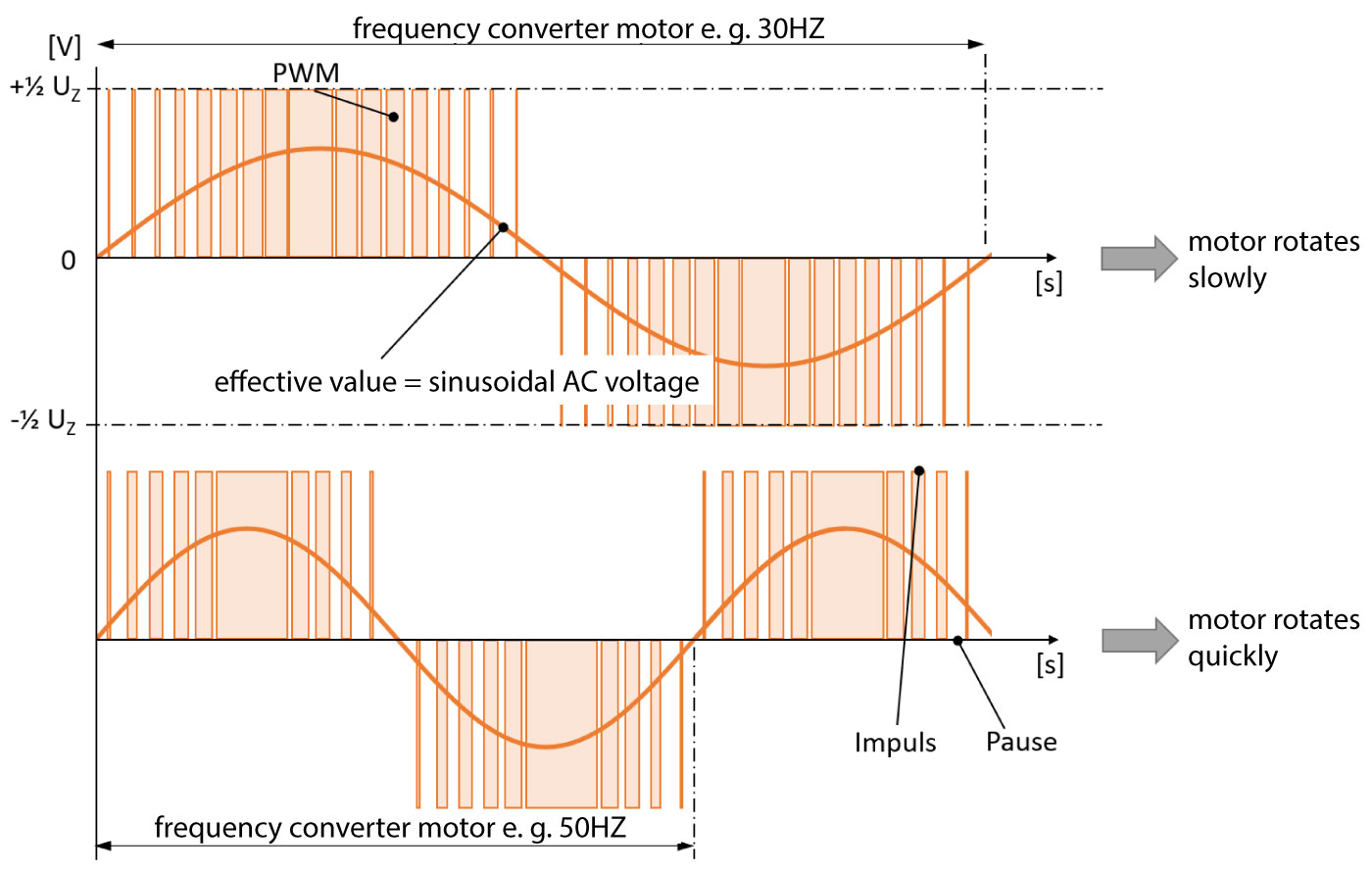
Pulse-width modulation is a square-wave signal with a constant pulse duration, which oscillates between two constant voltage values (in our example, half the intermediate circuit voltage +/- 1/2*UZ). The duty cycle, i.e. the ratio of pulse width to break width, varies here. Depending on the variant, different signal forms can be imitated. If an effective value is formed from the “hacked” PWM signal, the signal form corresponds to a sinusoidal alternating voltage.
The major advantage of PW modulation is the high efficiency, as the transistors can be operated in efficient switching mode. In contrast, operation in amplifier mode would be more technically complex and generate more losses, as too much power would be converted into heat.
Incidentally, inverters for PV systems, digital Hi-Fi amplifiers and speed controllers for brushless motors in RC model construction also work according to this principle.
What is special about our ÖLFLEX® VFD or SERVO cables
Alongside the described benefits of variable speed control and the high saving potential, the PW modulation explained above unfortunately also has undesirable side effects. As a result, high voltages are switched from plus to zero volts within a few nano seconds. In the switching process itself, transients are formed, which can spread through electromagnetic couplings within the system, but also within our ÖLFLEX® motor cables. These high-frequency interference currents can stray through the factory earthing system and have a negative impact on the transmission quality of, for example, parallel data cables. However, these problems can be avoided through special cable designs, special insulation materials, and installation by trained specialist personnel.
Outlook – which new developments are in the pipeline?
In today’s day-to-day industrial environment, almost all motors are controlled using frequency converters. The number of these drive trains will increase sharply, particularly in the small power classes. One reason for this is the low price, which makes gears for multi-axial drives unprofitable. In addition, logistics and handling applications increase the need for small drives and frequency converters.
In terms of technology, there are new developments in the field of semiconductors. For example, the innovative silicon carbide transistors (SiC) can be used to significantly reduce energy losses within frequency converters. This means that devices in the same power classes can be constructed much smaller in the future, as less heat loss needs to be discharged.
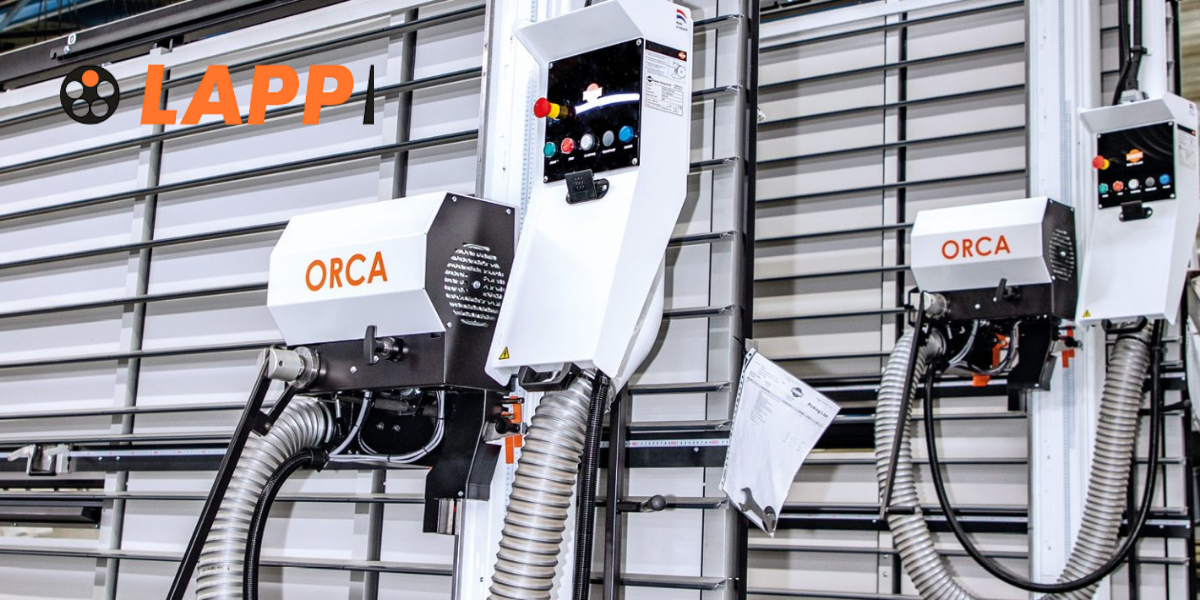
The Dutch manufacturer of industrial sawing machines, Harwi, is known for the durability, quality and user-friendliness of its products. To increase its own productivity and simplify assembly, Harwi opted for tailored cable assemblies from LAPP. This saves the machine manufacturer four hours per constructed machine, which sums up to an additional machine every two to three weeks. In addition, the installation of the sawing machines on site has been noticeably simplified and the risk of incorrect cabling is reduced.
Safety, ergonomics and health – these are Harwi’s current development goals for the industrial sawing machines they have been constructing since 1960. The company from Helmond in the Netherlands is also known for its extremely durable products: “We know that there are Harwi sawing machines that have been in use since my birth, i.e. for over 35 or 40 years,” says Adrian van Mensvoort, Managing Director of Harwi. Three years ago, Adrian took over the management of Harwi as part of a generational handover in the long-established company. Although the robust, high-quality machines are highly rated on the market, he left no stone unturned when it came to finding ways to further optimise their quality and durability.
Robust sawing machines for a safe and ergonomic work environment
Since its founding in 1960, Harwi has made a name for itself with robust, easy-to-use and high-quality sawing machines for the wood processing industry, but Harwi has also long been associated with renowned DIY brands such as Praxis, Gamma and Bouwmaat. Alongside durability and ergonomics, Harwi also stands out by producing all important types of sawing machine: vertical sawing machines, radial sawing machines and circular sawing machines. “Circular sawing machines are definitely our speciality,” says Adriaan, “but our quality standards apply equally to all types of sawing machines that we manufacture.” The machines make their way to customers via a large network of dealers around the world who also take care of installation and service.
“When I became the new Managing Director, I knew that the company urgently needed innovation and development,” says Adriaan. “It was important to me to check all suppliers and dealers we work with and ensure that their services and products correspond to our newly established core values.” Harwi’s main goal has always been to supply machines for a safe and ergonomic work environment, a guiding factor in all technical and service decisions. “We want our machines to make life easier and convenient for everyone involved, from design and installation to the many years of use,” adds Adrian. “And we noticed that connection solutions were an aspect where improvement would make a big difference in this respect.”
LAPP cable assemblies make design and installation considerably easier
Before the change in management, Harwi ordered cables and connectors as individual items. During the construction of a machine, employees took what they needed from the warehouse at their own discretion. “This worked because we had and still have qualified employees, but it was not particularly efficient with regard to either assembly time or storage,” explains Adriaan. “And this made installation harder for the customer than it ought to be.” Harwi sawing machines are delivered in two parts which must be assembled on site. This also includes connecting the saw motor to the control unit. “Until recently, this meant opening a junction box and manually wiring several power cables,” says Adriaan. “It was a complex process that required a trained eye and if even one of these many cables was connected incorrectly, the saw blade turned in the wrong direction or not at all.”
Adrian approached Harwi’s long-standing partner LAPP and asked for a solution. Cable assemblies quickly proved to be the ideal solution. LAPP now supplies all necessary cables and connectors for every Harwi sawing machine as a complete, pre-assembled package. Alongside significant time savings in assembly, this also means that Harwi no longer needs specialists for this task – a major advantage in the face of increasing skilled worker shortages. Last but not least, this has made the installation process easier: instead of the previous complex process, service personnel simply has to click in one cable bundle during assembly and the cabling is complete. “This makes life much easier for our dealers,” emphasised Adrian, “and it greatly reduces customer complaints about their machine not working properly.”
Full trust in LAPP
Under different circumstances, Adriaan might have felt unsure about deciding to switch to pre-assembled cable assemblies: “Outsourcing something as essential as cable assemblies requires a certain degree of trust in the manufacturer, as you become quite dependent. But we have complete trust in LAPP.” The fact that LAPP has been a supplier to Harwi for many years has helped develop a relationship of trust. “LAPP works closely with its customers and both the sales and engineering teams understand our needs,” says Adriaan. “We noticed their enthusiasm when it came to finding a solution tailored to our application – and they did just that. And they always take our feedback on board for improvements. That is exactly the type of relationship that we are looking for with a supplier and we will definitely continue maintaining this partnership in the future.”
The formation of “Lapp Policabos”, the name by which we are currently recognized, had as its primary objective to respond to the needs of the Portuguese market in special and optical cables, not contemplated in the production programs of national manufacturers, essentially in the industrial area.
Since the company’s foundation almost 30 years ago, it has been growing safely and sustainably. Proof of this is the numbers presented, however, also the satisfaction of our customers with the quality of the products and the service provided.
At Lapp Policabos, we base all our work on the quality and professionalism with which we respond to the needs of those who seek us out.
The basis of the success of our mission is involvement and commitment, training and transparency towards all stakeholders, from customers to suppliers, without ever discolouring our employees.
In the future, we aspire to be a company in which its employees feel proud and vice versa because only by working as a team will we be able to succeed.